Last Updated: April 19, 2026
The human body is an absolute marvel, a complex system of bones, muscles, and organs working in perfect symphony. For young minds, body parts and human anatomy offer scientific vocabulary and a way to learn how the body works.
As parents and educators, we instinctively want to nurture this innate curiosity. The market is overflowing with incredible human anatomy toys for kids, promising to make learning fun and engaging. But herein lies the challenge: with so many options, from elaborate models to digital experiences, how do you choose the right one? How do you pick a toy that genuinely resonates with your child’s learning style and age, offering more than just fleeting entertainment?
This guide cuts through the clutter by focusing on the two primary approaches to teaching young learners about their incredible bodies: interactive digital learning versus hands-on tactile exploration. We’ll delve into the unique benefits and considerations of each, helping you navigate the choices effectively to find the perfect human body educational toys to ignite your child’s inner scientist.
Affiliate Link Disclosure – If you see a product you like and click through to buy it, I would genuinely appreciate it. I may earn a small commission — at no extra cost to you. It would mean a lot, thanks!
Interactive Digital Anatomy Toys: The “Voice Pedia” Experience
Imagine a toy that speaks, lights up, and guides your child through the intricate pathways of the human body with a simple touch. This is the magic of interactive digital anatomy toys – a modern approach to learning that often combines stunning visuals with clear, engaging audio explanations, all within a self-contained unit.
These toys typically feature a high-quality display or an interactive mat with touch-sensitive areas representing different body parts or systems. When a child touches a specific area, the toy responds with fascinating facts, pronunciations, and explanations. Think of systems like the TopBright’s “My Body Voice Pedia” – a great example of this genre. It’s a comprehensive system designed to make learn human body for kids an auditory and visual delight, much like an encyclopedia that talks back!
Key Features:
- Comprehensive Systems: Often covers multiple body systems (skeletal, muscular, circulatory, digestive, etc.) in a single, compact unit.
- Engaging Audio Explanations: Clear, often enthusiastic narration makes complex concepts accessible to young children.
- Immediate Feedback: Touch a bone, hear its name and function instantly. This direct interaction enhances retention.
- Self-Contained Learning: No need for extra books or props; everything is integrated into one device.
Pros:
- Excellent for Auditory Learners: Children who learn best by hearing will thrive with the spoken explanations and clear pronunciations.
- Compact & Portable: Many are lightweight and easy to take on trips, providing educational entertainment on the go.
- Immediate Gratification: The instant audio and visual feedback can be very motivating for young learners.
- Broad Introduction: Can cover a wide array of topics quickly, offering a fantastic initial exposure to the breadth of human anatomy.
- Ideal for Initial Exposure: Great for teaching anatomy to preschoolers or early elementary children, offering a fun, low-pressure introduction.
Cons:
- Less Tactile Manipulation: While interactive, the primary engagement is touching a surface, which may limit the deep physical exploration some children crave.
- Potential Screen-Time Considerations: Although often educational, parents mindful of screen time might want to balance these toys with other activities.
- May Limit Deep Physical Exploration: A child might learn about the heart, but they won’t physically build or dissect it in the same way.
Best for: Young children (preschool to early elementary), particularly auditory learners, who benefit from guided audio explanations and a quick, engaging introduction to complex anatomical concepts. It’s a fantastic entry point for families seeking an interactive anatomy toy that makes initial learning accessible and fun.
Hands-On & Tactile Anatomy Toys: Building, Exploring & Feeling
Stepping away from screens, we enter the world of hands-on and tactile human anatomy toys for kids. This category is incredibly diverse, encompassing everything from chunky puzzles to soft plushies, detailed models, engaging books, and elaborate science kits. The common thread? They encourage physical interaction, manipulation, and multi-sensory engagement, tapping into a child’s natural desire to build, explore, and feel.
Consider the recommendations from resources like Chalk Academy, which often highlight the power of tangible learning. This approach moves beyond simply identifying parts to understanding relationships, functions, and the satisfaction of building something from scratch.
Diverse Formats Include:
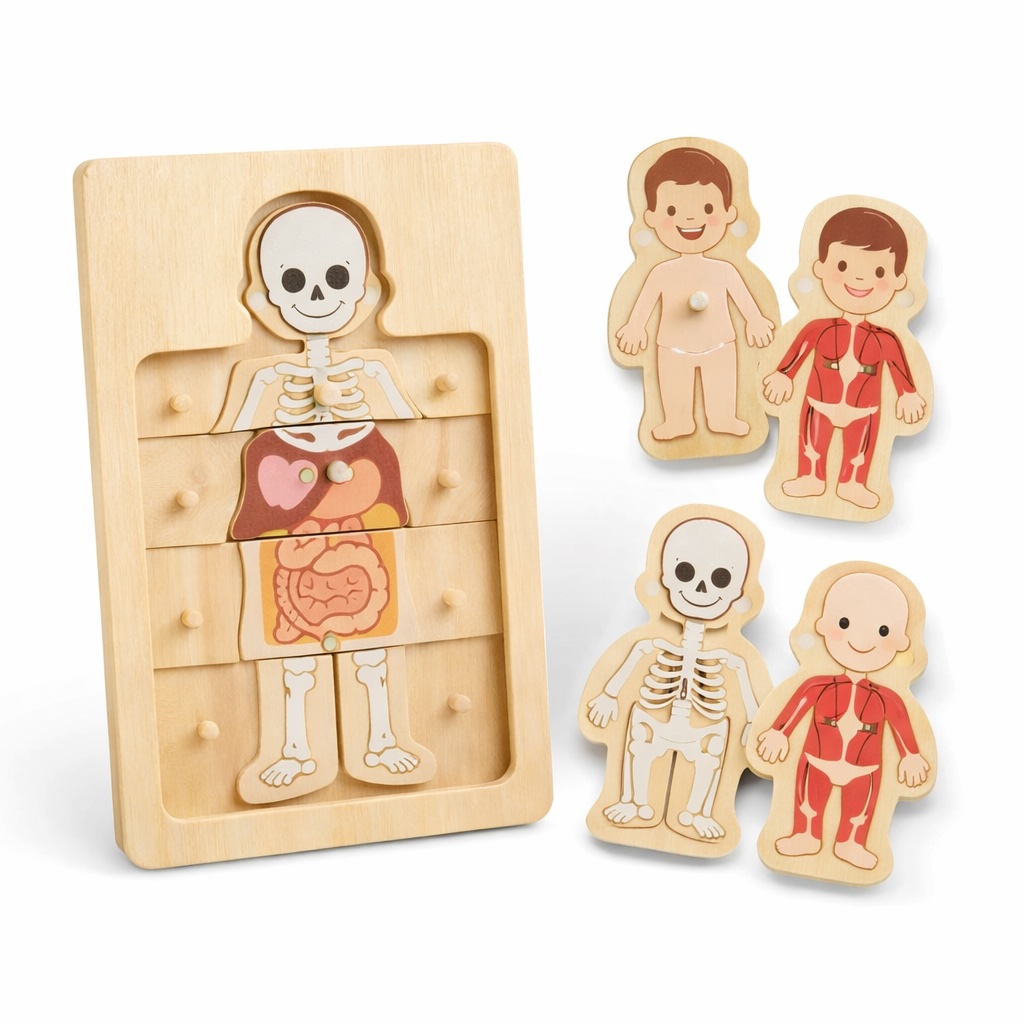
- Anatomy Puzzles for Kids: Layered puzzles showing skin, muscles, organs, and bones, allowing children to build the body piece by piece.
- Plush Organ Toys: Soft, cuddly representations of organs that can be removed and replaced, often with friendly faces and simple explanations.
- Anatomical Models for Children: Detailed 3D models of skeletons, organs, or full body systems, sometimes designed to be assembled or “dissected” safely.
- Interactive Books & Charts: Lift-the-flap books, pop-up books, and large wall charts with removable pieces.
- Kids Science Gifts Anatomy Kits: These often involve experiments, creating models with clay, or even growing crystals to represent body parts.
Key Features:
- Multi-Sensory Engagement: Appeals to touch, sight, and sometimes even smell (with dough-based kits), creating a richer learning experience.
- Active Building & Manipulation: Children are actively constructing, deconstructing, and arranging, fostering a deeper understanding of how parts fit together.
- Variety of Formats: Allows parents to choose specific types of educational anatomy games or models based on their child’s specific interests (e.g., a child fascinated by bones might love a skeleton model).
- Encourages Problem-Solving: Assembling a complex puzzle or model requires critical thinking and spatial reasoning.
Pros:
- Fosters Kinesthetic & Visual Learning: Perfect for children who learn by doing, touching, and seeing how things physically connect.
- Deep Engagement: The act of building and manipulating leads to a more profound understanding and retention of concepts.
- Encourages Problem-Solving: Figuring out where a liver goes in an anatomy model or how a joint bends builds valuable cognitive skills.
- Catters to a Wider Age Range: Simple puzzles are great for toddlers, while detailed models and kits can challenge middle schoolers, making them excellent kids science gifts anatomy.
- No Screen Time: A welcome alternative for parents looking to reduce digital interaction.
- Promotes Collaborative Play: Many hands-on toys are great for parents and children to work on together.
- Hands-on Anatomy for Kids: Truly lives up to its name, allowing children to get a physical sense of their body.
Cons:
- Can Involve Multiple Pieces: Puzzles and models might have many small parts, requiring careful storage and potentially supervision.
- May Require More Adult Supervision: Complex assembly or explaining intricate concepts might need more parental involvement initially.
- Storage Challenges: Larger models or multiple kits can take up more space.
Best for: A wider age range (toddlers to middle school), particularly visual and kinesthetic learners, and those who thrive on detailed exploration, problem-solving, and hands-on mastery of concepts. If your child loves to build, create, or take things apart, this approach is ideal.
Key Considerations: Matching the Toy to Your Child’s Needs
Choosing the “best” human anatomy toys for kids isn’t about finding a universally acclaimed product; it’s about finding the right product for your unique child. Here are critical factors to consider:
- Age & Developmental Stage:
- Toddlers & Preschoolers: Focus on simple, durable, large-piece anatomy puzzles for kids, soft plush organs, or basic body charts. The goal is simple identification (e.g., “This is your heart!”) and exposure to body parts. Safety (no small parts) is paramount.
- Early Elementary (Ages 5-8): They can handle more detailed layered puzzles, simple anatomy models for children to assemble, and interactive digital toys with basic facts. They’re ready for more specific names and very basic functions.
- Upper Elementary/Middle School (Ages 9-12+): These children can engage with more complex human body educational toys, including detailed models, advanced science kits, and digital apps that explain systems and processes in depth. They’re ready for understanding how systems work together.
- Child’s Learning Style:
- Auditory Learners: Will benefit greatly from the clear narrations and sound effects of interactive anatomy toy products.
- Visual Learners: Will be drawn to detailed charts, colorful diagrams, and the visuals offered by both digital and hands-on models.
- Kinesthetic/Tactile Learners: Thrive on building, touching, and manipulating. Montessori anatomy toys, puzzles, and models are perfect for them. Consider a blend if your child has a mixed learning style!
- Depth of Learning Desired:
- Basic Recognition: If you’re aiming for your child to simply identify major organs or bones, a talking digital toy or a basic plush set might suffice.
- Understanding Functions & Relationships: For deeper learning – how the heart pumps blood, or how muscles move bones – more detailed anatomy models for children, science kits, or layered puzzles that show systems interacting will be more effective.
- Budget & Durability:
- Investment: Human anatomy toys range from inexpensive plushies and simple puzzles to significant investments in elaborate digital systems or highly detailed anatomical models. Decide what you’re comfortable spending.
- Longevity: Consider how long the toy will hold your child’s interest and if it can grow with them. High-quality, durable materials are key, especially for hands-on anatomy for kids toys that will be frequently manipulated.
- Safety & Materials:
- Always check age recommendations.
- Ensure materials are non-toxic, especially for younger children who might put things in their mouths.
- Avoid small, choking-hazard parts for toddlers and preschoolers.
Conclusion: Making an Informed Choice for Anatomy Fun
The journey of learn human body for kids is an exciting one, full of wonder and discovery. As we’ve explored, both interactive digital anatomy toys and hands-on tactile anatomy toys offer incredibly valuable and distinct learning experiences. Digital options provide an accessible, auditory, and often compact way to introduce complex topics, while tactile toys foster deep engagement, problem-solving, and multi-sensory exploration.
The “best” human anatomy toys for kids isn’t a one-size-fits-all solution. Instead, it’s a personal decision, deeply rooted in your child’s unique needs, age, and individual learning preferences. Perhaps your child is a budding auditory learner who thrives on digital explanations, or maybe they’re a tactile explorer who needs to build and manipulate to truly grasp a concept.
Ultimately, we recommend considering a blend of approaches for a well-rounded educational experience. An interactive anatomy toy can serve as a fantastic introduction, sparking initial curiosity, while a collection of hands-on anatomy for kids puzzles or models can then deepen that understanding through active exploration. By thoughtfully weighing these options against your child’s specific profile, you are empowered to confidently choose the perfect human anatomy toy to ignite their curiosity and foster a lifelong love of learning about the magnificent machine we call the human body.