In a world bustling with plastic toys, a growing number of parents are seeking alternatives that align with their values: quality, sustainability, and ethical production. Wooden play food sets stand out as a timeless choice, offering not just imaginative fun but also a tangible connection to craftsmanship and eco-conscious living.
At Oddblocks, we understand that choosing the best for your child involves more than just aesthetics. It’s about knowing where the materials come from, how they’re made, and the impact they have on both your little one and the planet. This comprehensive guide will navigate you through the world of wooden pantry food playsets, highlighting our top picks and empowering you to make informed decisions.
Affiliate Link Disclosure – If you see a product you like and click through to buy it, I would genuinely appreciate it. I may earn a small commission — at no extra cost to you. It would mean a lot, thanks!
Why Choose Wooden Toys for Conscious Parents?
Wooden toys are more than just playthings; they are investments in sustainable play and development. Here’s why discerning parents consistently choose wood:
- Unmatched Durability: Unlike plastic, wooden toys are built to last for generations. Their robust construction withstands vigorous play, spills, and the test of time, making them a sustainable choice that reduces waste.
- Superior Safety & Non-Toxic Finishes: A primary concern for any parent is safety. High-quality wooden toys are often crafted from natural materials and finished with water-based, non-toxic paints and glues, free from harmful chemicals like BPA, phthalates, and formaldehyde. This ensures a healthier play environment for your child.
- Eco-Friendly & Sustainable Sourcing: Many leading wooden toy manufacturers commit to using sustainably harvested wood, such as FSC-certified timber or rubberwood from replenished forests. Choosing these toys supports responsible forestry and minimizes environmental impact.
- Stimulates Imaginative & Sensory Play: The natural feel, weight, and sometimes subtle scent of wood engage a child’s senses in a way plastic cannot. Wooden play food encourages open-ended imaginative play, fostering creativity, problem-solving, and language development through role-playing scenarios.
- Aesthetic Appeal & Timelessness: Wooden toys often possess a charming, classic aesthetic that complements any home environment. They are beautiful to look at and evoke a sense of nostalgia, making them treasured items that can be passed down.
Our Top Picks for Eco-Friendly Wooden Pantry Playsets (with In-Depth Reviews)
We’ve curated a selection of wooden pantry food playsets that excel in quality, ethical production, and play value. Each review dives into what makes these sets stand out for the conscious buyer.
(Note to Oddblocks: Please insert high-quality images for each product below, showcasing different angles and details.)
1. PlanToys Healthy Breakfast Set: A Benchmark for Sustainable Play
Why This Toy Shines: PlanToys is a pioneer in sustainable toy manufacturing, and their Healthy Breakfast Set is a shining example of their commitment. Crafted from sustainable rubberwood (sourced from rubber trees no longer producing latex), this set uses non-formaldehyde glue and is colored with organic pigments and water-based dyes. Their dedication extends to every detail, ensuring the entire production process, from sourcing to disposal, is environmentally sound and ethically managed. The pieces are chunky, smooth, and perfect for small hands, encouraging imaginative breakfast preparations.
Pros:
- Made from sustainably sourced rubberwood, a byproduct of the latex industry.
- Uses non-formaldehyde glue and organic, water-based dyes, ensuring superior safety.
- Strong emphasis on ethical manufacturing and fair labor practices.
- Highly durable and designed for long-lasting play.
- Promotes healthy eating habits through realistic and engaging designs.
Cons:
- Typically at a higher price point due to premium materials and ethical production.
- Specific sets might have a limited variety of items compared to larger, less specialized sets.
2. Hape Pretend Play Wooden Healthy Food Set: Global Standards, Local Fun
Why This Toy Shines: Hape is renowned for its high-quality wooden toys that meet stringent international safety and sustainability standards. Their Healthy Food Set is typically made with FSC-certified wood (Forest Stewardship Council), guaranteeing responsible forest management. The paints are child-safe, water-based finishes that are non-toxic and durable. Hape focuses on simple, robust designs that encourage open-ended play, and their manufacturing processes often incorporate energy-efficient methods and waste reduction initiatives. This set offers a good variety of fruits and vegetables, perfect for teaching about nutrition.
Pros:
- Often uses FSC-certified wood, promoting responsible forestry.
- Finishes are non-toxic, child-safe, and water-based.
- Excellent craftsmanship ensures durability and smooth edges.
- Supports imaginative play and early nutrition education.
- Widely available and recognized for consistent quality.
Cons:
- While excellent, specific details on broader ethical labor practices can sometimes require deeper research beyond product pages.
- Design style is classic, which some may find less “modern.”
3. Melissa & Doug Wooden Slice and Toss Salad Set: Engaging and Durable
Why This Toy Shines: Melissa & Doug are a household name known for creating classic, engaging toys that prioritize imaginative play. Their Slice and Toss Salad Set is a popular choice, typically constructed from durable solid wood (often rubberwood or birch) and finished with non-toxic, child-safe paints and lacquers. While their sustainability certifications might vary across products, the brand focuses on quality construction that ensures longevity. This set’s unique “slice and toss” feature adds an interactive element, teaching fine motor skills and creative food preparation.
Pros:
- Highly engaging and interactive design promotes active play.
- Made with durable, solid wood construction.
- Finished with child-safe, non-toxic coatings.
- Excellent for developing fine motor skills and imaginative role-play.
- Widely accessible and generally well-regarded for quality.
Cons:
- Specific certifications for sustainable wood sourcing (like FSC) are not always prominently highlighted for all products.
- Transparency regarding comprehensive ethical manufacturing practices can sometimes be less detailed than smaller, specialized eco-brands.
4. Tender Leaf Toys Wooden Food Playset: Artistry Meets Eco-Consciousness
Why This Toy Shines: Tender Leaf Toys prides itself on beautiful, intricate designs combined with a strong commitment to sustainability. Their Wooden Food Playsets are crafted from sustainable rubberwood, a natural byproduct, and stained with non-toxic, water-based dyes. They aim to be plastic-free and engage in responsible manufacturing practices in their family-run factory in Indonesia, working to replant trees for every one used. Their attention to detail in the food items makes them particularly appealing and realistic for play.
Pros:
- Made from sustainable rubberwood with a commitment to replanting.
- Uses non-toxic, water-based dyes for vibrant and safe finishes.
- Beautifully detailed and aesthetically pleasing designs.
- Strong emphasis on ethical production within their own factory.
- Encourages rich imaginative play with realistic food items.
Cons:
- Premium pricing reflects the high quality, design, and ethical commitment.
- Availability might be more limited compared to larger brands.
The Informed Buyer’s Guide: What to Look For in Wooden Toys
To truly ensure you’re investing in the best for your child and the planet, here’s a detailed checklist of what to prioritize:
1. Sustainable Sourcing & Materials
- Certified Wood: Look for certifications like FSC (Forest Stewardship Council) or PEFC (Programme for the Endorsement of Forest Certification). These ensure wood comes from responsibly managed forests.
- Renewable Woods: Prioritize toys made from rapidly renewable resources like rubberwood (often harvested from retired latex trees) or bamboo.
- Reclaimed/Recycled Wood: Some innovative brands utilize reclaimed or recycled wood, further reducing environmental impact.
- Avoid Unknowns: If a brand doesn’t specify its wood source, it’s worth asking or researching further.
2. Non-Toxic Finishes & Safety Standards
- Water-Based Paints & Stains: These are the safest option, typically free from heavy metals, lead, and other harmful chemicals. Look for phrases like “non-toxic water-based paints” or “organic pigments.”
- Natural Oils & Waxes: Some toys are finished with natural oils (like linseed or beeswax) which are safe and allow the wood’s natural beauty to shine through.
- Formaldehyde-Free Glues: Ensure that any glues used are non-toxic and formaldehyde-free.
- Safety Certifications: Look for compliance with international safety standards such as ASTM F963 (USA), EN71 (Europe), or CPSIA (Consumer Product Safety Improvement Act). These indicate rigorous testing for hazards like choking, sharp edges, and chemical content.
- Age Appropriateness: Always check the recommended age range to ensure small parts are not a choking hazard for younger children.
3. Ethical Manufacturing Practices
- Transparency: Brands committed to ethical production are often transparent about their factories, labor practices, and supply chain. Look for information on their websites or product descriptions.
- Fair Labor: While harder to verify for every brand, support companies known for fair wages, safe working conditions, and no child labor. Certifications like Fair Trade (though less common for toys) are a strong indicator.
- Environmental Management: Beyond wood sourcing, consider if the company has practices to reduce energy consumption, waste, and pollution in their manufacturing process.
4. Durability, Design & Play Value
- Solid Construction: Wooden toys should feel sturdy and well-made, without loose parts or rough edges.
- Smooth Finish: Inspect for a smooth, splinter-free finish.
- Open-Ended Design: Toys that can be used in multiple ways stimulate creativity and imagination more effectively than single-purpose toys.
- Educational Potential: Does the toy encourage learning, problem-solving, or social skills?
5. Brand Reputation & Customer Support
- Research: Look for reviews from other parents and articles from reputable sources.
- Responsiveness: A company that stands behind its products with good customer service is a reliable choice.
Care & Maintenance for Lasting Wooden Toys
To ensure your wooden play food sets last for years to come, follow these simple care tips:
- Wipe Clean: Use a damp cloth with mild soap (if necessary) to wipe down toys. Avoid harsh chemicals or abrasive cleaners.
- Air Dry: Allow toys to air dry completely after cleaning to prevent warping or mildew.
- Avoid Soaking: Never submerge wooden toys in water, as this can cause the wood to swell, crack, or warp.
- Store Properly: Keep wooden toys in a dry place, away from direct sunlight or extreme temperatures, which can damage the wood or fade the colors.
- Regular Inspection: Periodically check toys for any signs of wear, splintering, or loose parts to ensure continued safety.
Your Burning Questions Answered: Wooden Toy FAQ
Q: Are wooden playsets truly safer than plastic ones?
A: When sourced and finished responsibly, yes. High-quality wooden toys avoid the BPA, phthalates, and other potentially harmful chemicals often found in some plastics. They are also less likely to break into sharp pieces. Always check for non-toxic finishes and safety certifications.
Q: What makes wooden toys eco-friendly?
A: Their eco-friendliness stems from several factors: they are often made from renewable resources (sustainable forests, rubberwood); they are durable and biodegradable; and their production often has a lower carbon footprint compared to plastic, especially when brands prioritize energy efficiency and waste reduction.
Q: Are wooden toys more durable than plastic ones?
A: Generally, yes. Wooden toys are inherently robust and can withstand rough play much better than most plastic toys, which can crack or break. This longevity makes them a more sustainable and cost-effective choice in the long run.
Q: How do I clean wooden play food without damaging it?
A: Use a lightly damp cloth, possibly with a small amount of mild, child-safe soap. Wipe down the surfaces and then immediately dry with a clean cloth. Avoid harsh detergents, dishwashers, or soaking the toys, as water can cause the wood to warp or crack.
Q: What does “non-toxic paint” really mean for wooden toys?
A: “Non-toxic” means the paint does not contain harmful substances like lead, heavy metals, or volatile organic compounds (VOCs) that could be ingested or cause adverse health effects. Look for certifications or clear statements about water-based, child-safe paints.
Conclusion
Choosing wooden pantry food playsets is a conscious decision to invest in toys that are not only fun and educational but also safe, durable, and ethically produced. By prioritizing brands that offer transparency in their material sourcing, manufacturing practices, and safety standards, you empower your child with engaging play experiences while supporting a healthier planet.
At Oddblocks, we hope this guide equips you with the knowledge to select the perfect wooden play food sets for your family, fostering creativity, sustainability, and joy for years to come.
***
Discover top ethically-made wooden pantry play food sets with grocery item that turn pretend shopping into fine-motor, vocabulary, and social-skill builders for kids over three years old.
✅ Make-believe grocery trips and pantry stocking turn everyday routines into open-ended learning, from sorting and categorizing to early literacy with labels.
✅ Driving the “groceries” home, putting items in the fridge or on a shelf, and planning a pretend meal all reinforce executive function and practical life skills.
✅ Melissa & Doug leads the category with several sets, and you can mix in eco-minded brands to keep a natural, durable play kitchen that grows with your child.
Affiliate Link Disclosure – If you see a product you like and click through to buy it, I would genuinely appreciate it. I may earn a small commission — at no extra cost to you. It would mean a lot, thanks!
Best Wooden Pantry Play Foods
- (01) Melissa & Doug (Pantry Products)
- (02) Hape
- (03) Melissa & Doug (Fridge Food)
- (04) Tender Leaf Toys
- (05) Melissa & Doug (Condiments)
- (06) Bigjigs Toys
- (07) Le Toy Van
- (08) Plan Toys
- (09) Tiny Land
Oddblocks Opinion: Pantry play is hand-driven and sensory. Kids grasp a wooden bottle, twist a lid, line up boxes, and “scan” cans into a basket. Those small, real-world motions make categories and routines click: breakfast vs. dinner, dry shelf vs. fridge, what goes first in the bag. It is memorable because it mirrors family life, and it is useful because it practices planning and order without pressure.
(01) Melissa & Doug (Pantry Products)
Visit the Melissa & Doug official website.
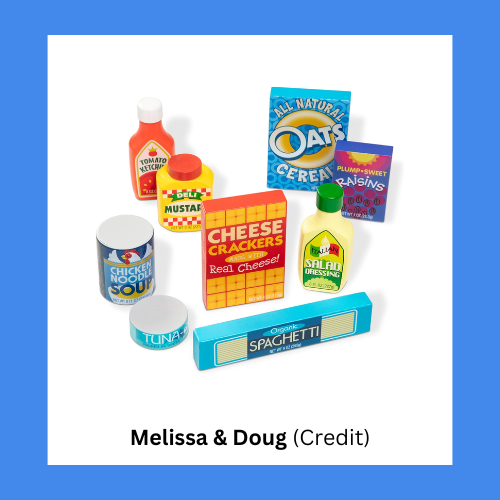
The Melissa & Doug wooden pantry products play food set includes nine familiar dry-goods: tuna, ketchup, spaghetti, soup, sugar, crackers, salad dressing, mustard, and cereal. It supports simple sorting, label recognition, and shelf-stocking play that pairs well with a toy market or play kitchen. See Melissa & Doug on Amazon.
(02) Hape
Visit the Hape official website.
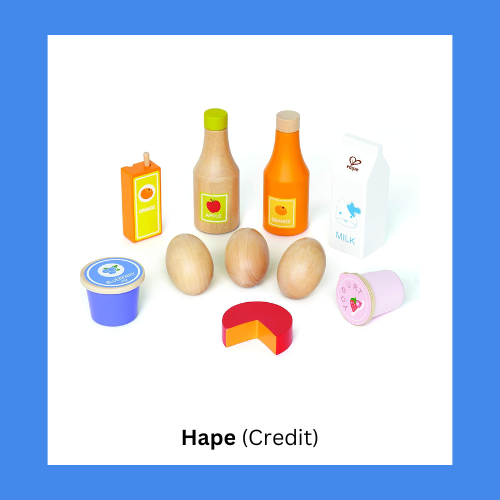
Hape’s healthy basics kid’s wooden play kitchen accessories food set delivers the “corner store basics” in a 10-piece bundle for ages 3–5. Items cover fridge and freezer staples to spark role-play, organization skills, and creativity, with child-safe, non-toxic finishes. See Hape on Amazon.
(03) Melissa & Doug (Fridge Food)
Visit the Melissa & Doug official website.
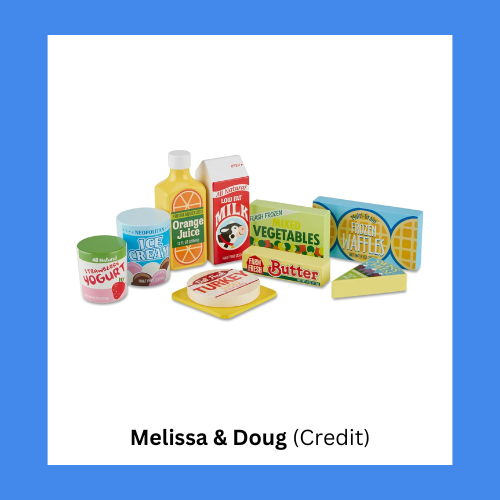
This fridge food wooden play food set by Melissa & Doug brings nine “refrigerate after opening” items like milk, cheese, waffles, and veggies. It bridges pantry and cold storage play so kids can decide what lives on a shelf, what goes into the fridge, and what to “cook” next. See Melissa & Doug on Amazon.
(04) Tender Leaf Toys
See Tender Leaf Toys on Amazon.
Visit the Tender Leaf Toys official website.
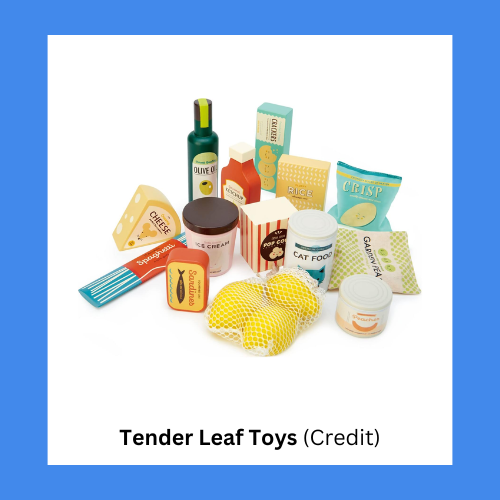
A supermarket grocery set by Tender Leaf Toys combines 17-pieces of branded grocery goods with illustrated labels, from an ice cream tub to a tin of sardines. It invites supermarket role-play, basket-packing, and shelf-arranging, and the varied shapes are great for grip variety and matching. See Tender Leaf Toys on Amazon.
(05) Melissa & Doug (Condiments)
Visit the Melissa & Doug official website.
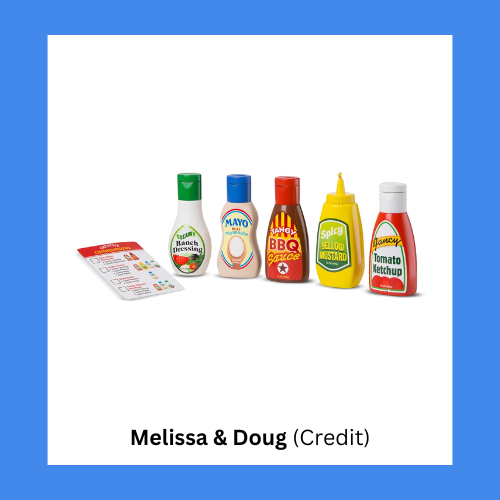
This 5-piece favorite condiments play food set by Melissa & Doug includes barbecue sauce, mustard, mayonnaise, ketchup, and ranch dressing. “String” appears to squirt when tipped, and the menu card supports order-taking, sequencing, and playful combinations.
(06) Bigjigs Toys
Visit the Bigjigs Toys official website.
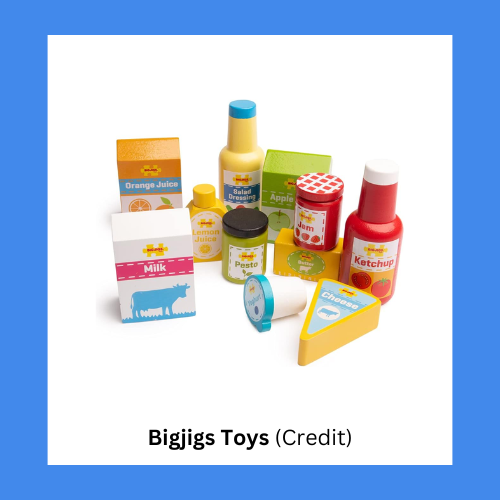
This chilled groceries set by Bigjigs Toys focuses on fridge items like cheese, milk, butter, juice, and condiments. Children can move goods from “store” to “home,” sort cold vs. shelf-stable, and practice meal planning with realistic wooden packaging.
(07) Le Toy Van
Visit the Le Toy Van official website.
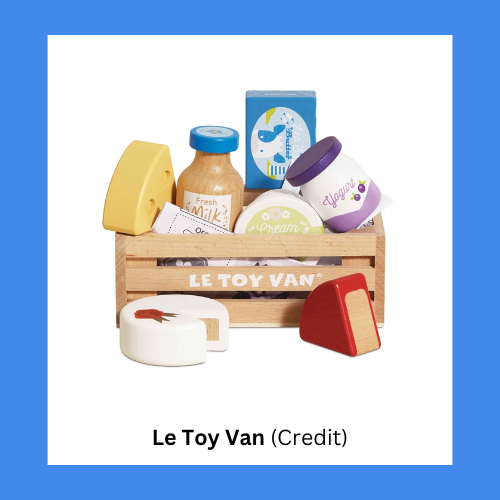
The wooden supermarket cheese and dairy crate by Le Toy Van gathers cheeses, jams, and milk in a wooden carry box. It complements a play market stall or pantry shelf and helps kids sort by food group or meal type. See Le Toy Van on Amazon.
(08) Plan Toys
Visit the Plan Toys official website.
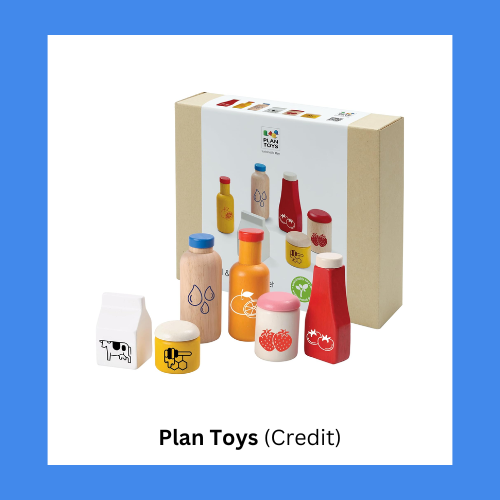
Plan Toys offers a wooden food a nd beverage pretend play set with a 6-piece assortment: orange juice, water bottle, milk carton, ketchup, jam, and honey. The compact bottles and cartons fit little hands, encourage everyday vocabulary, and align with practical life work in Montessori-style play. See PlanToys on Amazon.
(09) Tiny Land
See it on the Tiny Land official website.
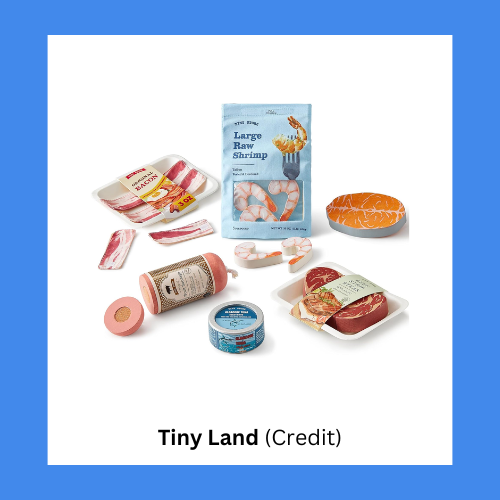
This organic play food set by Tiny Land offers six protein items in paper trays: shrimp, steak, sausage, bacon, salmon, and a tuna can. It expands pantry and fridge play beyond dry goods, supports food-group sorting, and adds variety to pretend meal prep. See Tiny Land on Amazon.
Over to you!
Building a pantry play corner is simple: choose one core set for dry goods, add one fridge-focused set, then layer a small basket or shelf for “shopping” and storage. Watch how your child sequences the trip, the unpacking, and the meal plan, and add new items only when the story calls for it.