Last Updated: April 5, 2026
A plant growing kit gives children direct experience of a full life cycle — seed to soil to sprout to plant — in a way that no screen or book can replicate. The best kits are honest about what’s involved (patience, daily watering, some failures), contain everything needed to start, and use seeds that actually germinate reliably for young growers.
Affiliate Link Disclosure – If you see a product you like and click through to buy it, I would genuinely appreciate it. I may earn a small commission — at no extra cost to you. It would mean a lot, thanks!
Quick Comparison
| Kit type | Best age | Time to first sprout | Best for |
|---|---|---|---|
| Herb garden kit | 4+ years | 5–14 days | Kitchen connection, fast results, indoor use |
| Sunflower / bean kit | 3+ years | 5–10 days | Fastest sprouters, visible dramatic growth |
| Vegetable starter kit | 5+ years | 7–21 days | Food-to-table connection, summer gardens |
| Wildflower / pollinator kit | 4+ years | 10–21 days | Outdoor planting, nature education, butterflies |
| Terrarium kit | 6+ years | Varies | Longer project, indoor self-contained ecosystem |
What to Look for
Seed germination reliability. The single biggest reason plant kits disappoint children is seeds that don’t sprout. Beans, sunflowers, radishes, and peas are among the most reliable germinators — kits using these as primary seeds have the highest success rate with young children. Avoid kits that rely primarily on slow or temperamental seeds for a first-time grower.
Everything included. A good kit contains seeds, growing medium, pots or containers, and clear illustrated instructions. If a kit requires separately purchased soil, pots, or tools, that friction kills momentum — especially for a gift. Check the product description carefully for what’s actually in the box.
Organic seeds. Non-GMO, organic seeds are standard in quality kits and worth prioritising — both for the child’s safety and because they tend to germinate more reliably from fresh stock.
Biodegradable pots. Peat pots, coir pellets, or paper pulp containers that can be planted directly into the ground eliminate the transplant step — one of the most failure-prone moments for young gardeners. Better for the child’s experience and better for the environment.
Age match. Kits with quick, dramatic results (beans shooting up in a week) work better for children under 6 who have limited patience. Kits with longer growing cycles and more complex care (terrariums, slow-growing vegetables) suit older children who can sustain interest over weeks.
Best Plant Growing Kits for Kids
Herb garden starter kit
Herb kits — basil, mint, parsley, coriander — are the most practical growing kits for families because the results connect directly to the kitchen. Children who grow their own basil and then put it on pizza develop a concrete understanding of food origin that abstract education can’t match. Herbs are fast growers (most sprout within 1–2 weeks) and can live on a windowsill year-round.
Sunflower and bean growing kit
Sunflowers and beans are the most forgiving seeds for young children — fast germination (5–7 days for beans, 7–10 for sunflowers), dramatic visible growth, and hard to kill once established. Kits that combine these two give children quick early wins (bean sprout within a week) and a longer payoff (sunflower reaching full height over summer). A good first kit for children 3–6.
Vegetable garden starter kit
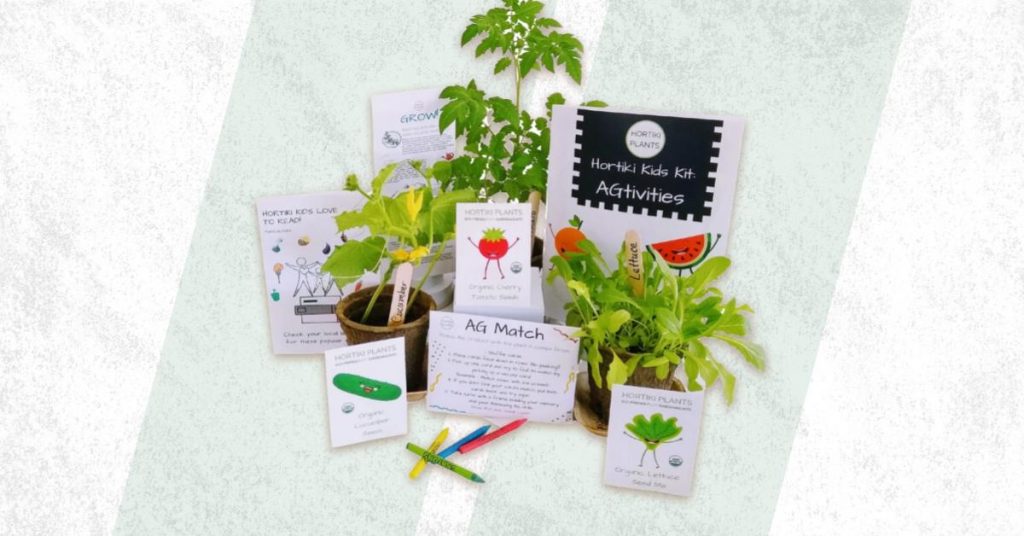
For families with outdoor space, a vegetable starter kit — tomatoes, lettuce, carrots, radishes — gives children ownership over food from seed to table. Radishes are the most child-friendly vegetable for impatient growers: they’re ready to harvest in 25 days from planting. Tomatoes take longer but the payoff (eating a tomato you grew) tends to be the most memorable garden moment for young children.
Wildflower and pollinator kit
Wildflower kits teach children about pollinator ecosystems — bees, butterflies, and the relationship between flowers and insects. These suit outdoor planting in spring and pair naturally with a bug catcher kit for extended nature exploration. Look for kits with native wildflower mixes rather than generic decorative flowers — they’re more ecologically valuable and tend to be hardier.
Terrarium kit
A terrarium is a longer, more complex project suited to children 6 and up. The appeal is creating a self-contained miniature ecosystem — moss, small plants, possibly small rocks and decorative elements — in a glass container. Once established, a closed terrarium requires almost no maintenance, which teaches children something interesting: a self-regulating natural system. Good for children who engage with science and observation.
For tools to pair with a growing kit, see: best kids gardening tools. For a birdhouse building kit to extend the outdoor nature theme, see: best kids birdhouse kits.