

Last Updated: March 28, 2026
Mancala is a legendary board game — enriching, enduring, and beautifully crafted.
Today, we’re diving deep into the captivating world of Mancala, an ancient game that continues to charm and challenge players of all ages.
For parents, it’s a guilt-free way to boost math skills, critical thinking, and patience, all while enjoying precious family time away from screens.
For children, it’s an exciting adventure of scooping, sowing, and outsmarting, where every shiny “seed” holds the promise of a clever capture.
What makes a Mancala game board so enduringly special? Let’s explore.
Affiliate Link Disclosure – If you see a product you like and click through to buy it, I would genuinely appreciate it. I may earn a small commission — at no extra cost to you. It would mean a lot, thanks!
What Makes Mancala So Special? A Journey Through History and Play
Mancala is not a single game, but a family of games, often referred to as “sowing games” due to their characteristic gameplay of distributing seeds or stones around a series of pits. Its roots stretch back thousands of years, making it one of the oldest known games still played today.
The Global Family of Mancala: More Than Just One Game
While the most common variant you’ll find in North America is often called “Kalah,” the Mancala family tree is vast and varied, reflecting diverse cultures across Africa, Asia, and the Middle East.
- Kalah: Perhaps the most widely recognized, Kalah involves capturing seeds by landing the last seed of a sow in an empty pit on your side, opposite an opponent’s filled pit. The goal is to collect the most seeds in your “store.”
- Oware (Awalé): Popular in West Africa and the Caribbean, Oware is often played with 48 seeds and features specific rules for capturing seeds and preventing an opponent from being “starved” (unable to make a move).
- Congkak (Sungka): Prevalent in Southeast Asia, this variant typically uses two rows of seven pits, plus two large “homes.” Capturing rules can be quite intricate, often allowing for successive captures.
Each variant, while sharing the core mechanic of sowing and capturing, offers unique strategic nuances that invite endless exploration and learning. It’s truly a testament to universal human ingenuity.
The Brain-Boosting Benefits: Why Mancala is a Parent’s Dream
Beyond its ancient charm, Mancala is a powerhouse for cognitive development, offering a playground for the mind disguised as simple fun.
- Strategic Thinking & Planning: Every move impacts future turns. Children learn to think several steps ahead, considering not just their own gain but also their opponent’s potential responses. It’s like a gentle introduction to chess, but with a more tactile, intuitive feel.
- Arithmetic & Pattern Recognition: Counting seeds, predicting outcomes, and understanding numerical relationships become second nature. Kids subconsciously practice addition and subtraction with every sow. They also begin to recognize patterns in the board state, anticipating opportunities for captures or strategic placement.
- Fine Motor Skills: The act of grasping and distributing small seeds or stones helps develop dexterity and hand-eye coordination.
- Patience & Sportsmanship: Mancala encourages careful consideration rather than impulsive moves. It teaches the value of waiting for the right moment and gracefully navigating wins and losses.
- Cultural Appreciation: Introducing children to Mancala is also an introduction to a piece of global heritage, fostering an appreciation for diverse traditions and the universal language of play.
Mastering the Art of the Scoop: Understanding Mancala’s Core Rules
For newcomers, Mancala can seem a bit mysterious, but its core mechanics are wonderfully intuitive. While variants exist, here’s a quick overview of the most common Kalah rules.
Mancala in 60 Seconds
Players take turns picking up all the seeds from one of their pits, then “sowing” them one by one into subsequent pits around the board. If the last seed lands in your store, you get another turn. If it lands in an empty pit on your side, and the opposite pit on your opponent’s side has seeds, you capture all those seeds (and your last seed) into your store! The game ends when one player’s side of the board is empty, and the player with the most seeds in their store wins.
Step-by-Step Gameplay Guide (Kalah Variant)
- (1) Setup: The board has two rows of six smaller pits, and a larger “store” (often called a Kalah or Mancala) at each end. Each of the twelve smaller pits starts with an equal number of seeds (e.g., four per pit). Your store is to your right.
- (2) Taking a Turn: Choose any one of your six pits that contains seeds. Scoop up all the seeds from that pit.
- (3) Sowing: Moving counter-clockwise, drop one seed into each pit, including your own store, but skipping your opponent’s store.
- (4) Extra Turn: If your last seed lands in your own store, you get to take another turn immediately.
- (5) Capturing: If your last seed lands in an empty pit on your side of the board, and the pit directly across on your opponent’s side has seeds, you capture both your last seed and all the seeds in your opponent’s opposite pit, placing them into your store.
- (6) Game End: The game concludes when all six pits on one player’s side are empty. The player who still has seeds on their side collects all remaining seeds into their own store.
- (7) Winning: The player with the most seeds in their store wins!
Strategic Insights for Budding Masters
Mancala is easy to learn but offers deep strategic possibilities. Here are a few foundational tips:
- Plan Ahead: Always consider where your last seed will land. Can it secure an extra turn? Set up a capture? Or perhaps empty one of your opponent’s valuable pits?
- Protect Your Side: Try to avoid leaving empty pits on your side, especially early in the game, as they can become targets for your opponent’s captures.
- Target the Opponent: Look for opportunities to capture seeds from your opponent’s side, or to “starve” their side by emptying their pits, forcing them to give up their remaining seeds.
- Practice “Power Sows”: Sometimes, a long sow around the board can empty your own pits strategically, or fill your store.
As the great chess master José Raúl Capablanca once wisely advised, adapted for our context, “You must have the will to win. In Mancala, that means planning several moves ahead, not just one.”
Our Curated Picks: Discovering the Best Mancala Boards for Your Family
At Oddblocks, we believe the best toys are those that combine exceptional design with engaging play. When it comes to Mancala, this means considering everything from the feel of the wood to the satisfaction of the beads.
How Oddblocks Chooses the Best
Our selection process for highlighting top-tier Mancala boards focuses on several key elements:
- Material Quality: We prioritize boards made from durable, attractive materials like solid hardwoods (e.g., acacia, rubberwood, walnut) or sustainable bamboo. The finish should be smooth and non-toxic.
- Bead Quality: The tactile experience is paramount. We look for high-quality glass stones, polished river rocks, or sturdy wooden beads that feel good to handle and make a satisfying sound.
- Craftsmanship & Durability: A well-made board should withstand years of enthusiastic play. Joints should be secure, and the design thoughtful.
- Portability & Storage: For some, a folding board with secure bead storage is essential; for others, a beautiful, static board is preferred.
- Ease of Play & Age Appropriateness: Pits should be adequately sized for easy scooping, and bead sizes safe for the recommended age range.
- Overall Value: We assess whether the quality and design justify the investment.
- User Feedback: General sentiment from real players helps confirm our evaluations.
Top Recommendations by Category
While we don’t manufacture or sell these games directly, we can describe the types of exemplary Mancala sets you’ll find online from reputable brands and artisans.
The Classic Heirloom: Solid Wood & Smooth Stones
Description: These are the timeless pieces designed to be cherished for generations. Crafted from rich, often sustainable hardwoods, they feature a smooth, polished finish that highlights the natural grain of the wood. The pits are deep and generously sized, often filled with beautiful, weighty glass or polished stone “seeds” that clack satisfyingly as they’re moved.
Expert Insight: Look for boards made from solid, dense woods like acacia or rubberwood, known for their durability and attractive appearance. The hinges (if folding) should be robust, and the finish should be lead-free and resistant to minor wear.
Parent Perspective: This type of board is an investment in enduring family play and also serves as an attractive piece of decor. It’s built to withstand years of use and provides a superior tactile experience, making it a wonderful gift. Be sure to check age recommendations for small beads.
Child’s Excitement: “The beads are so pretty and feel great to scoop! And the board looks really special.”
- Pros: Exceptional durability, beautiful aesthetic, superior tactile experience, heirloom quality.
- Cons: Often heavier and less portable, typically comes with a higher price point.
- Who This Is For: Families seeking a high-quality, beautiful game that will last generations and can be proudly displayed.
The Travel Companion: Compact & Cleverly Designed
Description: Ideal for families on the go or those with limited storage, these boards cleverly combine portability with playability. Many feature a folding design that doubles as a storage case for the beads, often with a magnetic clasp to keep everything secure. Materials can range from lighter woods to sturdy bamboo.
Expert Insight: Pay attention to the quality of the hinge mechanism and the bead storage solution. A well-designed travel board will keep seeds secure, preventing spills during transport. Bamboo is a great lightweight and sustainable option.
Parent Perspective: A lifesaver for road trips, camping, or visits to grandparents. It’s easy to pack, quick to set up, and the secure storage means no lost pieces. Value for money is often excellent.
Child’s Excitement: “We can take this anywhere! It’s fun to play in the car or on vacation.”
- Pros: Highly portable, convenient and secure storage for beads, often more budget-friendly.
- Cons: Materials may be lighter, sometimes lacks the ‘heirloom’ feel of solid wood boards.
- Who This Is For: Adventurous families, those needing compact storage, or anyone looking for a great game to take on the go.
The Beginner’s Board: Accessible & Engaging
Description: Designed with younger or first-time players in mind, these sets prioritize ease of use and engagement. They often feature larger pits for easier scooping by small hands and come with larger, often colorful, beads (sometimes plastic for durability, but quality wooden or larger glass options exist). Instructions are typically very clear and simplified.
Expert Insight: Look for robust construction that can handle enthusiastic play. Bead size is crucial here for safety and ease of handling. Boards with clear, high-contrast pit markings can also be helpful.
Parent Perspective: The perfect entry point for introducing Mancala to children aged 4-6+. It’s forgiving, durable, and encourages learning without intimidation. The focus is on the fun of the game.
Child’s Excitement: “These beads are so bright and easy to grab! I can see what I’m doing really well.”
- Pros: Excellent for introducing new players, very robust construction for younger children, often brightly colored to engage interest.
- Cons: Might lack the refined aesthetic of premium sets, sometimes made with less traditional materials.
- Who This Is For: Families introducing Mancala to young children or anyone wanting a very straightforward, user-friendly first experience.
The Deluxe Experience: Artisan Craftsmanship
Description: For collectors, connoisseurs, or those seeking a truly unique gift, these Mancala boards are often hand-carved, made from exotic woods, or feature exceptionally crafted details. Beads might be natural polished stones, custom glass, or even carved wood. These are not just games, but works of art.
Expert Insight: These sets often boast unique design elements, superior material pairings, and meticulous hand-finishing. They represent the pinnacle of traditional game craftsmanship.
Parent Perspective: An unforgettable gift, a stunning centerpiece, and a true collector’s item. The attention to detail is remarkable, offering a luxurious play experience.
Child’s Excitement: “This board is so beautiful, it feels like a treasure!”
- Pros: Stunning visual appeal, unique materials and design, conversation piece, often supports artisan craft.
- Cons: Premium price point, may require more delicate handling, potentially less robust for very rough play.
- Who This Is For: Gifting, collectors, or anyone desiring an artful, high-end version of the game that doubles as a display piece.
Before You Make Your Move: Key Considerations for Buying a Mancala Set
Choosing the right Mancala board is a personal decision. Here’s a quick checklist to guide your selection:
- Material:
Wood: Hardwoods (acacia, walnut) offer durability and beauty; bamboo is sustainable and lightweight. Consider the finish – natural oil, lacquer, or wax.
Beads: Glass stones are popular for their weight and sound; polished river stones offer a natural feel; wooden beads are lightweight and durable.
- Size & Portability: Do you need a large, static board for home display and serious play, or a compact, folding version for travel?
- Bead Type: The tactile feel and sound of the beads significantly impact the play experience. Consider if you prefer the satisfying clack of stone or glass, or the softer feel of wood.
- Durability: Especially important if the board will be handled frequently by young children. Look for sturdy construction and resilient materials.
- Age Appropriateness: Always check the manufacturer’s recommended age range, particularly regarding small beads and choking hazards for very young children.
- Storage: Does the board fold to store beads securely? Is there a designated bag or container for the pieces?
- Aesthetics: Does the design and material appeal to your personal style and complement your home environment?
Nurturing Your Mancala Board: Care and Beyond
A quality Mancala board, especially one made of wood, can last a lifetime with proper care.
Maintaining Your Wooden Treasure
- Cleaning: Wipe wooden boards with a soft, dry cloth. For occasional deeper cleaning, a slightly damp cloth with mild soap is acceptable, but ensure it’s dried thoroughly immediately afterward. Avoid harsh chemicals.
- Conditioning: Periodically, you might want to apply a food-safe wood conditioner or oil (like mineral oil or beeswax polish) to keep the wood from drying out, especially in arid climates.
- Storage: Store your board away from direct sunlight, extreme temperatures, and high humidity to prevent warping or cracking.
- Beads: Glass or stone beads can be washed with warm, soapy water and dried. Wooden beads can be wiped clean.
Mancala as a Gift: Thoughtful Giving
- For the Strategy Lover: A beautifully crafted, full-size wooden set will be appreciated for its depth of play and aesthetic appeal.
- For Young Learners: A sturdy, colorful beginner’s board with clear instructions will spark their curiosity and cognitive development.
- For the Globetrotting Friend: A compact, portable set ensures they can enjoy the game anywhere their adventures take them.
- For a Family Gift: A high-quality heirloom board encourages intergenerational play and creates lasting memories.
Mancala isn’t just a game; it’s a bridge to ancient traditions, a mental workout, and a beautiful addition to any home. Whether you’re a seasoned strategist or just discovering its charm, there’s a perfect Mancala board waiting for you. Dive in, explore the variants, and discover the joy of this truly timeless game.
***
✅ Mancala builds patience, counting, and planning through a calm rhythm of hands and stones.
✅ Wooden boards connect global heritage with tactile play that spans generations.
✅ Easy to learn, endlessly replayable, and quietly social for all ages.
Affiliate Link Disclosure – If you see a product you like and click through to buy it, I would genuinely appreciate it. I may earn a small commission — at no extra cost to you. It would mean a lot, thanks!
Top Quality Wooden Mancala Board Games
- (01) Pressman
- (02) Maple Landmark
- (03) Endless Games
- (04) Personalized Gallery
- (05) Regal Games
- (06) Grain & Grove Woodworks
Oddblocks Opinion: The feel of Mancala is almost musical—stones lifted and dropped in a repeating pattern that rewards focus. A wooden Mancala board turns this ancient game into something sensory and lasting. Children learn strategy without stress, and adults rediscover calm play that feels more like meditation than competition.
(01) Pressman
Visit the Pressman (Goliath) official website.

This folding wooden board includes 48 glass stones for classic two-player play. Compact and portable, it’s made for easy storage and travel. Pressman’s version keeps the game accessible, safe, and durable for all ages 6 and up. See Pressman on Amazon.
(02) Maple Landmark
Visit the Maple Landmark official website.

Handcrafted in Vermont, this wooden Mancala comes in two versions: pine with colorful glass stones or dark maple with natural rainbow stones. Each includes a storage pouch and printed instructions. Sustainably made and finished with care for long family use. See Maple Landmark on Amazon.
(03) Endless Games
Visit the Endless Games (Goliath) official website.
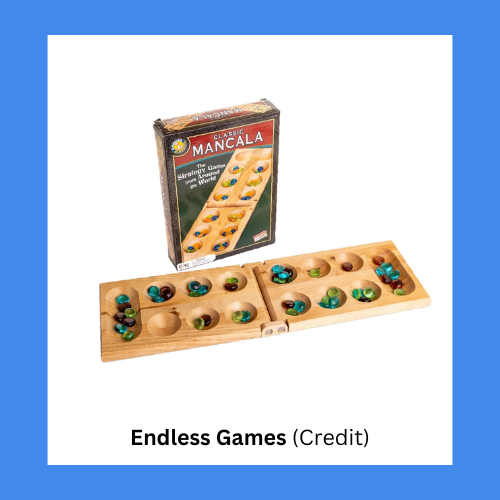
The previously viewed Pressman brand and this Endless Games brand are both part of the Goliath games group. Made from birch wood with bright glass stones, this simple and elegant board game brings easy fun to any table. The rules are quick to learn, making it ideal for families or friends who enjoy strategy and shared laughter. See Endless Games on Amazon.
(04) Personalized Gallery
See Personalized Gallery on Etsy.
Visit the Personalized Gallery official website.
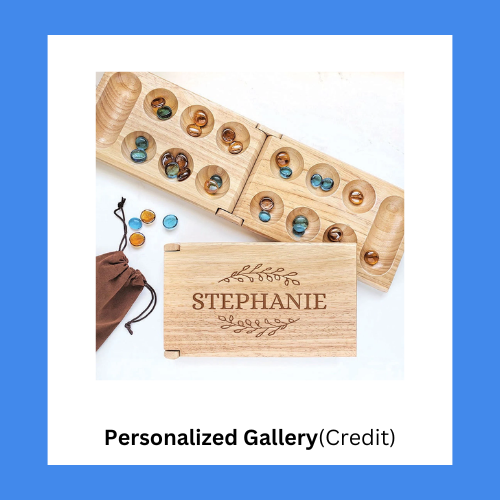
This engraved board turns a classic game into a meaningful keepsake. Crafted from solid wood, it can be customized with names or messages, making it a thoughtful family or couple’s gift that also plays beautifully. See Personalized Gallery on Etsy.
(05) Regal Games
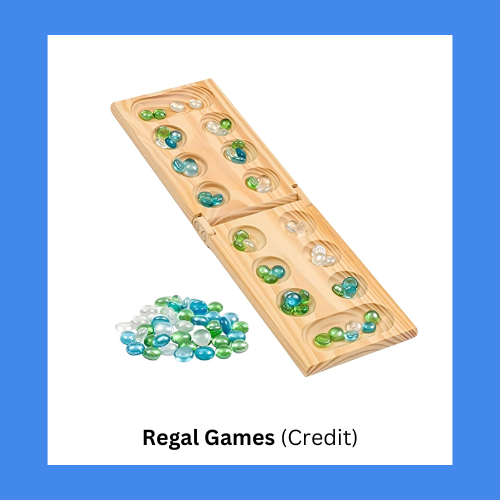
This foldable wooden Mancala includes 48 glass beads and a solid structure built to travel. The dual-pin hinge system makes setup fast and storage simple. Great for reinforcing counting and strategy skills in children and adults alike. See Regal Games on Amazon.
(06) Grain & Grove Woodworks
See Grain & Grove Woodworks on Etsy.
Visit the Grain & Grove Woodworks official website.
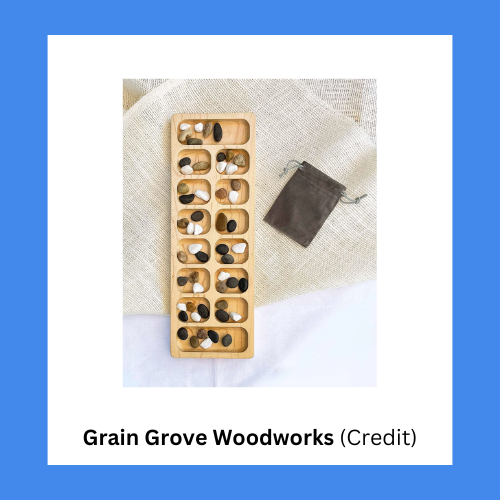
Crafted from solid maple and finished with semigloss lacquer, this handmade board uses natural river rocks for a grounded feel. Each piece is unique and can be engraved on the back. A lasting blend of sustainability, simplicity, and beauty. See Grain & Grove Woodworks on Etsy.
Over to you!
Interesting to kids, teens, and adults — Mancala teaches strategy through touch and rhythm rather than words. These wooden sets keep the game’s ancient simplicity alive while adding lasting quality and natural warmth. Whether on a family table or a coffee table, an eco-friendly wooden Mancala set fosters quiet connection between hands, minds, and generations.


