Last Updated: April 28, 2026
When Was The Waldorf Education Established? The Waldorf Education Started With Odd European Beginnings And Anti-Authoritarian Vision.
Imagine a world reeling from the first global conflict, a society grappling with profound social and economic chaos. Germany, in the immediate aftermath of World War I, was a crucible of despair and radical new ideas. Old orders had collapsed, leaving a vacuum ripe for innovation – or extremism. It was in this tumultuous environment, precisely when the very fabric of society felt most shredded, that a truly revolutionary educational model was born: Waldorf education.
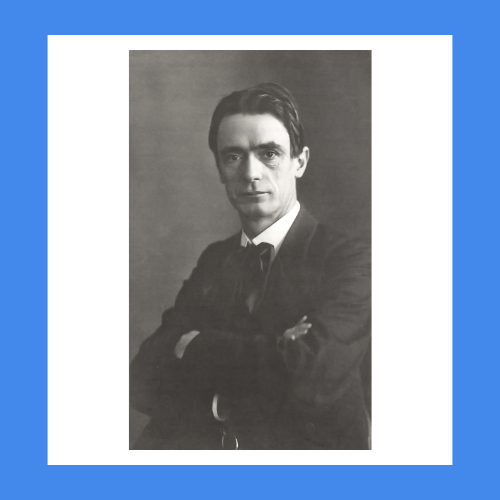
This wasn’t just another school; it was an audacious experiment. Conceived from the visionary insights of Rudolf Steiner, Waldorf education emerged as an inherently inclusive and anti-authoritarian model, designed to heal a broken nation by nurturing the whole child and fostering individual freedom. Its very existence was a quiet rebellion against the rigid, often militaristic, schooling systems of the past. What’s truly remarkable is not just its birth in such a challenging era, but its extraordinary resilience through the Nazi era and its subsequent, almost improbable, global spread, cementing its place as a significant alternative to traditional schooling worldwide.
Affiliate Link Disclosure – If you see a product you like and click through to buy it, I would genuinely appreciate it. I may earn a small commission — at no extra cost to you. It would mean a lot, thanks!
The Genesis in Post-WWI Germany: A Society in Search of Soul
The year is 1919. Germany is shattered. The Kaiserreich is gone, replaced by the fragile Weimar Republic. Millions have died, cities are scarred, and the economy is in ruins. Amidst this backdrop of material devastation, there was a deep hunger for spiritual and social renewal. Traditional institutions, including education, were seen by many as complicit in the failures that led to the war and its aftermath. People yearned for new ways of thinking, new ways of living, and crucially, new ways of raising children who would build a better future.
Enter Rudolf Steiner (1861-1925), an Austrian philosopher, scientist, artist, and social reformer. Steiner was not merely an educational theorist; he was a profound thinker whose holistic worldview, known as anthroposophy, sought to integrate science, art, and spirituality. He advocated for a radical reshaping of society based on what he called the Threefold Social Organism, where cultural life (including education), economic life, and legal/political life would operate with a degree of autonomy, fostering freedom and health within each sphere. For Steiner, education was not merely about vocational training or instilling nationalistic dogma; it was about cultivating the full human being, fostering critical thinking, creativity, and social responsibility – precisely what he believed a fractured Germany desperately needed. He saw the existing educational paradigms as restrictive, authoritarian, and ill-equipped to prepare individuals for a truly free and democratic society.
The Birth of a Vision: The First Free Waldorf School (1919)
The spark that ignited Waldorf education came from an unlikely source: a factory owner. Emil Molt, director of the Waldorf-Astoria cigarette factory in Stuttgart, Germany, was a progressive industrialist deeply concerned about the well-being of his employees and their children. Witnessing the grim realities faced by working-class families and recognizing the shortcomings of the public education system, Molt sought to provide a genuinely humane and enriching education for the children of his factory workers.
In the spring of 1919, Molt approached Rudolf Steiner, who was lecturing in Stuttgart, and asked him to establish and lead a school for the children of the Waldorf-Astoria factory employees. Steiner agreed, but on certain crucial conditions that underscored its radical nature: the school must be open to all children, regardless of their parents’ social class or financial means (it was initially free, later tuition-based with scholarships); it must be co-educational, teaching boys and girls together from kindergarten through high school; it must be managed by the teachers themselves, free from state or corporate influence; and it must have a unitary curriculum for all students.
On September 7, 1919, the first Free Waldorf School opened its doors. Steiner personally trained the initial cohort of teachers, imbuing them not just with a curriculum, but with a profound understanding of child development and a truly innovative pedagogical approach. This was a bold move, establishing an inclusive school that defied the rigid class distinctions and single-sex education prevalent in Germany at the time. It was a tangible manifestation of Steiner’s ideals for an alternative education that prioritized human development over societal conditioning.
Nurturing the Whole Child: Core Philosophical Foundations
From its inception, Waldorf education distinguished itself through a unique and deeply human-centered educational philosophy. At its core is the understanding of the “whole child” – head, heart, and hands. This means that learning is not confined to intellectual development alone (the head), but equally encompasses emotional and artistic development (the heart) and practical, will-driven activities (the hands).
Steiner’s pedagogy is developmentally appropriate, recognizing that children learn and experience the world differently at various stages. The curriculum is carefully crafted to align with these distinct phases of childhood, typically divided into seven-year cycles. Early childhood (kindergarten) emphasizes imaginative play, rhythm, and sensory experiences. In the elementary years (grades 1-8), subjects are taught through storytelling, art, music, and movement, fostering a deep, imaginative connection to the material. Adolescence (high school) encourages independent thought, critical analysis, and the development of individual judgment.
Crucially, arts-integrated learning is not merely an add-on; it’s fundamental to every subject. Mathematics might be taught through movement or drawing, history through dramatic reenactment, science through artistic observation and modeling. Music, painting, sculpture, handwork, and eurythmy (a unique art of movement developed by Steiner) are interwoven throughout the day and across the curriculum, fostering creativity, problem-solving skills, and emotional intelligence. This holistic approach aims to cultivate well-rounded individuals who are not only academically capable but also socially competent, emotionally intelligent, and ethically grounded. It was, and remains, a stark contrast to the siloed, test-driven methodologies common in many conventional schools.
Resilience in the Face of Adversity: Interruption and Rebirth
The vision of human freedom and individual development inherent in Waldorf education soon collided violently with the rising tide of authoritarianism in Germany. As the Nazi regime consolidated power in the 1930s, its ideology of racial purity, state control, and conformity stood in direct opposition to Waldorf’s foundational principles. Waldorf schools emphasized independent thinking, respect for individual dignity regardless of background, and an international perspective – all anathema to Nazi doctrine.
The regime viewed Waldorf schools with suspicion, labeling them “international,” “pacifist,” and promoting an “individualistic” worldview that undermined state authority. Teachers faced harassment, curricula were scrutinized, and attempts were made to force the schools to conform to Nazi educational guidelines. Unsurprisingly, Waldorf institutions resisted these pressures. Consequently, the Nazi government began systematically closing Waldorf schools. By 1938 and 1939, all Waldorf schools in Germany were forcibly shut down, their buildings often repurposed for Nazi youth organizations or military use. It seemed the radical experiment had been extinguished.
However, the spirit of Waldorf education proved incredibly resilient. Even during the war, the underlying principles and pedagogical insights were kept alive in secret gatherings and through dedicated individuals. With the end of World War II and the collapse of the Nazi regime, a remarkable post-WWII rebirth occurred. Almost immediately, surviving Waldorf teachers, parents, and supporters worked tirelessly to re-establish the schools. Often, they reopened in their original buildings, a powerful testament to the community’s deep commitment to this educational philosophy. This “second founding” underscored the deep roots Waldorf education had established and the profound need it filled for an education focused on human freedom and dignity after an era of unimaginable dehumanization.
From Post-War Germany to Global Phenomenon: Expansion and Modern Relevance
The post-WWII rebirth was not just a restoration; it was the prelude to extraordinary global expansion. From the 1960s onwards, as dissatisfaction with conventional, often rigid, educational systems grew in many Western countries, Waldorf education began to spread rapidly. First across Europe, then to North America, and eventually to every continent, establishing itself in diverse cultural and socio-economic contexts. Parents and educators around the world were actively seeking an alternative education that prioritized creativity, social responsibility, and holistic development over rote learning and standardized testing.
By its centenary in 2019, Waldorf education had grown into one of the largest and most widespread independent educational movements globally, with over 1,200 schools and nearly 2,000 early childhood centers in more than 80 countries. This impressive growth reflects its enduring appeal and its ability to adapt and thrive while maintaining its core principles.
In today’s rapidly changing world, Waldorf education continues to offer a compelling vision. It emphasizes critical thinking, ethical understanding, and the development of flexible, creative individuals who can adapt to new challenges. In an era dominated by digital screens, Waldorf’s emphasis on hands-on learning, human connection, and engagement with the natural world feels more relevant than ever. It champions the idea that education should nourish the child’s inner life, prepare them not just for a job, but for a meaningful life, and equip them with the capacity to contribute positively to society.
A Legacy of Freedom and Resilience
The history of Waldorf education is a truly compelling narrative of vision, courage, and unwavering dedication. Born from the chaos of post-WWI Germany, it emerged as a radical, anti-authoritarian, and inclusive model, seeking to build a new society by educating the whole child. Its journey through persecution and forced closure under the Nazi regime, only to experience a powerful post-WWII rebirth, stands as a powerful testament to its inherent value and the deep human need it addresses.
From those tentative beginnings in Stuttgart in 1919, Waldorf education has evolved into a vibrant global phenomenon, celebrated for its holistic approach and its commitment to fostering individual freedom and creativity. As we navigate the complexities of the 21st century, the legacy of Waldorf education remains profound: a living example of how a pedagogical approach rooted in human dignity can not only survive the darkest periods of history but continue to offer a vital and inspiring alternative education for future generations across the globe. It reminds us that true education is an act of liberation, constantly striving to meet the individual and societal need for freedom, creativity, and compassion.
Imagine a world reeling from the first global conflict, a society grappling with profound social and economic chaos. Germany, in the immediate aftermath of World War I, was a crucible of despair and radical new ideas. Old orders had collapsed, leaving a vacuum ripe for innovation – or extremism. It was in this tumultuous environment, precisely when the very fabric of society felt most shredded, that a truly revolutionary educational model was born: Waldorf education.
This wasn’t just another school; it was an audacious experiment. Conceived from the visionary insights of Rudolf Steiner, Waldorf education emerged as an inherently inclusive and anti-authoritarian model, designed to heal a broken nation by nurturing the whole child and fostering individual freedom. Its very existence was a quiet rebellion against the rigid, often militaristic, schooling systems of the past. What’s truly remarkable is not just its birth in such a challenging era, but its extraordinary resilience through the Nazi era and its subsequent, almost improbable, global spread, cementing its place as a significant alternative to traditional schooling worldwide.
The Genesis in Post-WWI Germany: A Society in Search of Soul
The year is 1919. Germany is shattered. The Kaiserreich is gone, replaced by the fragile Weimar Republic. Millions have died, cities are scarred, and the economy is in ruins. Amidst this backdrop of material devastation, there was a deep hunger for spiritual and social renewal. Traditional institutions, including education, were seen by many as complicit in the failures that led to the war and its aftermath. People yearned for new ways of thinking, new ways of living, and crucially, new ways of raising children who would build a better future.
Enter Rudolf Steiner (1861-1925), an Austrian philosopher, scientist, artist, and social reformer. Steiner was not merely an educational theorist; he was a profound thinker whose holistic worldview, known as anthroposophy, sought to integrate science, art, and spirituality. He advocated for a radical reshaping of society based on what he called the Threefold Social Organism, where cultural life (including education), economic life, and legal/political life would operate with a degree of autonomy, fostering freedom and health within each sphere. For Steiner, education was not merely about vocational training or instilling nationalistic dogma; it was about cultivating the full human being, fostering critical thinking, creativity, and social responsibility – precisely what he believed a fractured Germany desperately needed. He saw the existing educational paradigms as restrictive, authoritarian, and ill-equipped to prepare individuals for a truly free and democratic society.
The Birth of a Vision: The First Free Waldorf School (1919)
The spark that ignited Waldorf education came from an unlikely source: a factory owner. Emil Molt, director of the Waldorf-Astoria cigarette factory in Stuttgart, Germany, was a progressive industrialist deeply concerned about the well-being of his employees and their children. Witnessing the grim realities faced by working-class families and recognizing the shortcomings of the public education system, Molt sought to provide a genuinely humane and enriching education for the children of his factory workers.
In the spring of 1919, Molt approached Rudolf Steiner, who was lecturing in Stuttgart, and asked him to establish and lead a school for the children of the Waldorf-Astoria factory employees. Steiner agreed, but on certain crucial conditions that underscored its radical nature: the school must be open to all children, regardless of their parents’ social class or financial means (it was initially free, later tuition-based with scholarships); it must be co-educational, teaching boys and girls together from kindergarten through high school; it must be managed by the teachers themselves, free from state or corporate influence; and it must have a unitary curriculum for all students.
On September 7, 1919, the first Free Waldorf School opened its doors. Steiner personally trained the initial cohort of teachers, imbuing them not just with a curriculum, but with a profound understanding of child development and a truly innovative pedagogical approach. This was a bold move, establishing an inclusive school that defied the rigid class distinctions and single-sex education prevalent in Germany at the time. It was a tangible manifestation of Steiner’s ideals for an alternative education that prioritized human development over societal conditioning.
Nurturing the Whole Child: Core Philosophical Foundations
From its inception, Waldorf education distinguished itself through a unique and deeply human-centered educational philosophy. At its core is the understanding of the “whole child” – head, heart, and hands. This means that learning is not confined to intellectual development alone (the head), but equally encompasses emotional and artistic development (the heart) and practical, will-driven activities (the hands).
Steiner’s pedagogy is developmentally appropriate, recognizing that children learn and experience the world differently at various stages. The curriculum is carefully crafted to align with these distinct phases of childhood, typically divided into seven-year cycles. Early childhood (kindergarten) emphasizes imaginative play, rhythm, and sensory experiences. In the elementary years (grades 1-8), subjects are taught through storytelling, art, music, and movement, fostering a deep, imaginative connection to the material. Adolescence (high school) encourages independent thought, critical analysis, and the development of individual judgment.
Crucially, arts-integrated learning is not merely an add-on; it’s fundamental to every subject. Mathematics might be taught through movement or drawing, history through dramatic reenactment, science through artistic observation and modeling. Music, painting, sculpture, handwork, and eurythmy (a unique art of movement developed by Steiner) are interwoven throughout the day and across the curriculum, fostering creativity, problem-solving skills, and emotional intelligence. This holistic approach aims to cultivate well-rounded individuals who are not only academically capable but also socially competent, emotionally intelligent, and ethically grounded. It was, and remains, a stark contrast to the siloed, test-driven methodologies common in many conventional schools.
Resilience in the Face of Adversity: Interruption and Rebirth
The vision of human freedom and individual development inherent in Waldorf education soon collided violently with the rising tide of authoritarianism in Germany. As the Nazi regime consolidated power in the 1930s, its ideology of racial purity, state control, and conformity stood in direct opposition to Waldorf’s foundational principles. Waldorf schools emphasized independent thinking, respect for individual dignity regardless of background, and an international perspective – all anathema to Nazi doctrine.
The regime viewed Waldorf schools with suspicion, labeling them “international,” “pacifist,” and promoting an “individualistic” worldview that undermined state authority. Teachers faced harassment, curricula were scrutinized, and attempts were made to force the schools to conform to Nazi educational guidelines. Unsurprisingly, Waldorf institutions resisted these pressures. Consequently, the Nazi government began systematically closing Waldorf schools. By 1938 and 1939, all Waldorf schools in Germany were forcibly shut down, their buildings often repurposed for Nazi youth organizations or military use. It seemed the radical experiment had been extinguished.
However, the spirit of Waldorf education proved incredibly resilient. Even during the war, the underlying principles and pedagogical insights were kept alive in secret gatherings and through dedicated individuals. With the end of World War II and the collapse of the Nazi regime, a remarkable post-WWII rebirth occurred. Almost immediately, surviving Waldorf teachers, parents, and supporters worked tirelessly to re-establish the schools. Often, they reopened in their original buildings, a powerful testament to the community’s deep commitment to this educational philosophy. This “second founding” underscored the deep roots Waldorf education had established and the profound need it filled for an education focused on human freedom and dignity after an era of unimaginable dehumanization.
From Post-War Germany to Global Phenomenon: Expansion and Modern Relevance
The post-WWII rebirth was not just a restoration; it was the prelude to extraordinary global expansion. From the 1960s onwards, as dissatisfaction with conventional, often rigid, educational systems grew in many Western countries, Waldorf education began to spread rapidly. First across Europe, then to North America, and eventually to every continent, establishing itself in diverse cultural and socio-economic contexts. Parents and educators around the world were actively seeking an alternative education that prioritized creativity, social responsibility, and holistic development over rote learning and standardized testing.
By its centenary in 2019, Waldorf education had grown into one of the largest and most widespread independent educational movements globally, with over 1,200 schools and nearly 2,000 early childhood centers in more than 80 countries. This impressive growth reflects its enduring appeal and its ability to adapt and thrive while maintaining its core principles.
In today’s rapidly changing world, Waldorf education continues to offer a compelling vision. It emphasizes critical thinking, ethical understanding, and the development of flexible, creative individuals who can adapt to new challenges. In an era dominated by digital screens, Waldorf’s emphasis on hands-on learning, human connection, and engagement with the natural world feels more relevant than ever. It champions the idea that education should nourish the child’s inner life, prepare them not just for a job, but for a meaningful life, and equip them with the capacity to contribute positively to society.
A Legacy of Freedom and Resilience
The history of Waldorf education is a truly compelling narrative of vision, courage, and unwavering dedication. Born from the chaos of post-WWI Germany, it emerged as a radical, anti-authoritarian, and inclusive model, seeking to build a new society by educating the whole child. Its journey through persecution and forced closure under the Nazi regime, only to experience a powerful post-WWII rebirth, stands as a powerful testament to its inherent value and the deep human need it addresses.
From those tentative beginnings in Stuttgart in 1919, Waldorf education has evolved into a vibrant global phenomenon, celebrated for its holistic approach and its commitment to fostering individual freedom and creativity. As we navigate the complexities of the 21st century, the legacy of Waldorf education remains profound: a living example of how a pedagogical approach rooted in human dignity can not only survive the darkest periods of history but continue to offer a vital and inspiring alternative education for future generations across the globe. It reminds us that true education is an act of liberation, constantly striving to meet the individual and societal need for freedom, creativity, and compassion.