

The World Awaits Discovery: Why Every Young Explorer Needs a Magnifying Tool
The magic of a nature walk isn’t just in the grand landscapes, but in the tiny wonders often overlooked. A child with a magnifying tool transforms an ordinary stroll into an extraordinary expedition, turning a simple leaf into a landscape of veins, a pebble into a mosaic of crystals, or a ladybug into a creature of fascinating detail. At Oddblocks, we believe in equipping children with tools that spark curiosity, foster observation skills, and connect them deeply with the natural world.
But with so many options available, how do you choose the right magnifying tool for small children, especially for those adventurous nature walks? We’ve delved into what truly works, combining expert insights with real-world parent experiences to help you make an informed choice.
Affiliate Link Disclosure – If you see a product you like and click through to buy it, I would genuinely appreciate it. I may earn a small commission — at no extra cost to you. It would mean a lot, thanks!
Choosing the Right Magnifying Tool: Key Considerations for Your Child’s Adventure
Parents often share common concerns when selecting outdoor exploration tools for their little ones. Durability, safety, and ease of use are paramount. Here’s what Oddblocks and fellow parents recommend considering:
- Age Appropriateness: What’s perfect for a 7-year-old might be frustrating for a 3-year-old. For toddlers, look for larger, chunkier designs that are easy to grip. Older children might appreciate more detailed magnification.
- Durability is Non-Negotiable: Kids drop things. A lot. Cheap plastic models often crack or break after just a few tumbles, leading to disappointment. This is where options like wooden magnifying glasses truly shine. Their robust construction can withstand the rigors of outdoor play, making them a top recommendation for active explorers. Other durable materials like thick, impact-resistant plastic or even metal can also be good choices.
- Ease of Use & Ergonomics: Small hands need a comfortable grip. Handles should be chunky and well-balanced. Some children find traditional handheld models tricky to keep steady, while others quickly master them. Consider tools with ergonomic designs that fit naturally into a child’s grasp.
- Magnification Power: For young children, extreme magnification isn’t always necessary. A 3x to 5x magnification is often ideal, allowing them to see details without getting overwhelmed or struggling to focus. High power can be harder to use.
- Lens Material & Safety: This is crucial. Safety first when choosing toys that children look through.
- Acrylic Lenses: These are highly recommended for children’s magnifying tools. They are shatterproof, lightweight, and offer good clarity, making them significantly safer than glass. Many quality wooden magnifying glasses feature durable acrylic lenses.
- Glass Lenses: While offering superior clarity, glass poses a significant safety risk if broken. It’s generally best to avoid glass lenses for very young children.
- Child-Safe Design: Look for smooth edges, non-toxic materials, and securely fastened components.
Beyond the Traditional: Exploring Different Types of Magnifying Tools for Kids
The term “magnifying glass” often conjures images of a classic handheld lens, but the world of magnifying tools for kids is much broader! Based on real-world experiences and expert reviews, here’s a look at popular types:
- (01) The Classic Handheld Magnifying Glass:
- Pros: Simple, straightforward, versatile for observing anything from leaves to tiny insects. A well-designed wooden magnifying glass offers a tactile, durable, and aesthetically pleasing option that parents often prefer for its quality and longevity.
- Cons: Can be challenging for very young children to hold steady and focus.
- (02) Bug Viewers/Insect Jars:
- Pros: Perfect for observing live insects without harm. Children can safely capture a bug, observe it closely through a clear, often magnified, container, and then release it. This eliminates the need for steady hands, making them fantastic for toddlers and preschoolers. Some even come with built-in rulers! Brands like Carson and Learning Resources offer popular bug viewers.
- Cons: Limited to small, capturable subjects. Less versatile for examining static objects like rocks or bark.
- (03) Stand Magnifiers:
- Pros: These tools have a built-in stand, allowing children to place an object directly under the lens for hands-free observation. Great for detailed study of leaves, rocks, or even small toys.
- Cons: Less portable for active nature walks.
Comparative Analysis: What Parents Say Works Best
Many parents report that while dedicated bug viewers are fantastic for insects, a durable handheld magnifier (especially a sturdy wooden one) offers greater versatility for general nature exploration. Some families opt for both, using a bug viewer for live creatures and a wooden magnifying glass for everything else. The consensus? Avoid flimsy, toy-store-quality plastic lenses; they often frustrate children with poor optics and quick breakage.
Real Adventures Await: Practical Tips for Nature Walks with Your Magnifying Tool
- Start Simple: Don’t expect your toddler to perform complex scientific observations. Encourage them to look at things they already find interesting – a shiny rock, a vibrant flower, a tiny ant. “What do you see up close?” is a great prompt.
- Lead by Example: Show them how to use the magnifying tool. Get down on their level. Point out interesting textures on a tree bark, the delicate structure of a fallen leaf, or the tiny legs of an ant.
- “What If” Questions: Spark curiosity with open-ended questions: “What do you think this part does?” “Why do you think this leaf has fuzzy edges?”
- The “Nature Scavenger Hunt”: Create a simple list of things to find and magnify: “something green,” “something rough,” “something with lines,” “a tiny creature.”
- Observe Respectfully: Teach children to observe living creatures without disturbing them or their habitat. A bug viewer is perfect for temporary, safe observation. Remind them to release creatures gently back where they found them.
- Patience is Key: Some children will immediately fall in love with their magnifying tool, while others might take time. Keep it accessible and offer gentle prompts. The goal is exploration, not perfection.
- Pack a Small Bag: Encourage your child to collect a few non-living “treasures” (fallen leaves, interesting pebbles, seed pods) to bring home for closer examination under their magnifying tool.
Equip Your Young Explorer with the Best
At Oddblocks, we’re passionate about fostering a love for learning and discovery.
By considering age, durability, ease of use, and lens safety, you can confidently select a magnifying tool that will inspire your child’s inner scientist and make every nature walk an unforgettable micro-adventure. Let the exploration begin!
***
✅ A magnifying glass teaches patience and wonder — kids learn to look closely and notice what others miss. It’s a tool for mindfulness.
✅ Natural wooden frames give a tactile, earthy feel while keeping exploration screen-free and sensory-rich. It’s a toy for outdoor exploration.
✅ These simple optical tools nurture early science curiosity, connecting playtime with STEM learning.
Affiliate Link Disclosure – If you see a product you like and click through to buy it, I would genuinely appreciate it. I may earn a small commission — at no extra cost to you. It would mean a lot, thanks!
Top 6 Wooden Magnifying Glasses For Children
Oddblocks Opinion: Wooden magnifying glasses bring back the classic childhood urge to peer closer. They fit small hands and big imaginations —rolling in the grass, examining a beetle’s shell, tracing the veins of a leaf. There’s movement and focus in every session: the slow hand lift, the eye squint, the gasp when a hidden detail pops into view. It’s an early science tool disguised as play.
(01) TickIT
Visit the TickIT official website.
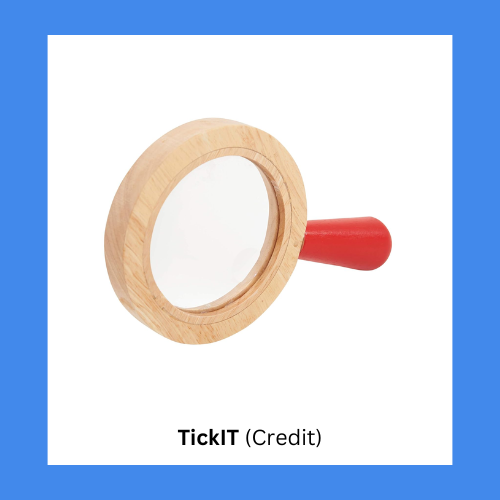
The TickIT wooden magnifying hand lens is built for tiny naturalists. Its smooth wooden handle and safe plastic lens make it durable and toddler-friendly. Designed for ages 12 months and up, it’s a tool for everyday observation—examining bugs, leaves, or even picture books. The integrated hanging loop adds easy storage for classroom or home play corners. See TickIT on Amazon.
(02) Plan Toys
Visit the Plan Toys official website.
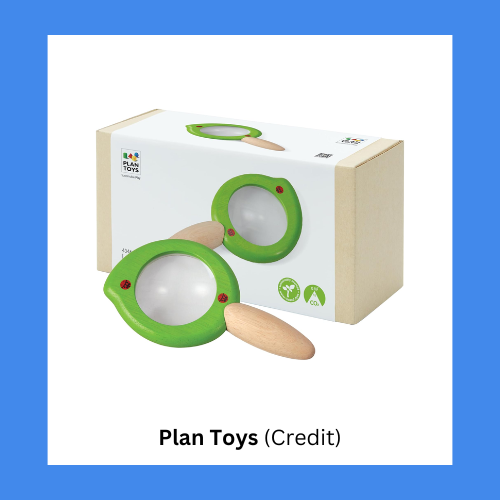
The Plan Toys wooden magnifying glass turns discovery into a sustainable habit. Crafted from chemical-free, kiln-dried rubberwood and tinted with non-toxic water-based color, it’s part of Plan Toys’ Green Concept line. Kids get a real, working magnifier while parents support a brand known for ethical manufacturing and child development programs. See Plan Toys on Amazon.
(03) Hape
Visit the Hape official website.
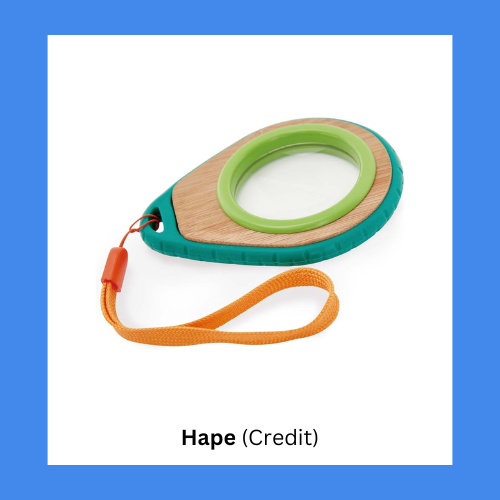
The Hape Nature Fun Detective Set pairs a real 4x magnifying glass with a two-tone whistle. Made of bamboo and plant-based plastic, it’s easy for kids to carry on hikes or schoolyard adventures. The design encourages children to observe quietly, then signal discoveries without startling wildlife. An engaging introduction to nature play and teamwork outdoors.
(04) TickIT (Easy Hold)
Visit the TickIT official website.
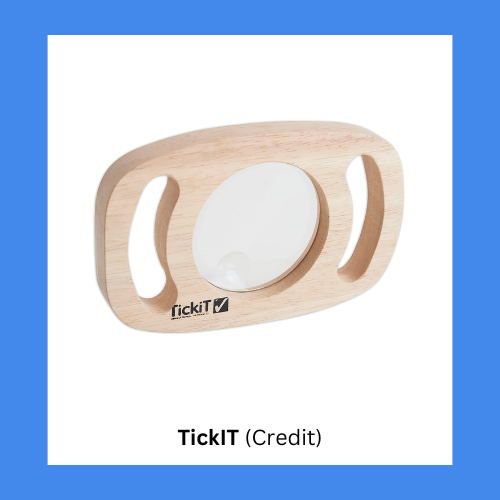
The TickIT Easy Hold Magnifier is an open-ended sensory tool with a wooden frame that’s smooth to grip and tough enough for toddler handling. The large lens offers a wide field of view for studying textures, colors, and patterns. It’s a staple in early years classrooms for encouraging close observation and early STEM skills.
(05) Ibwaae
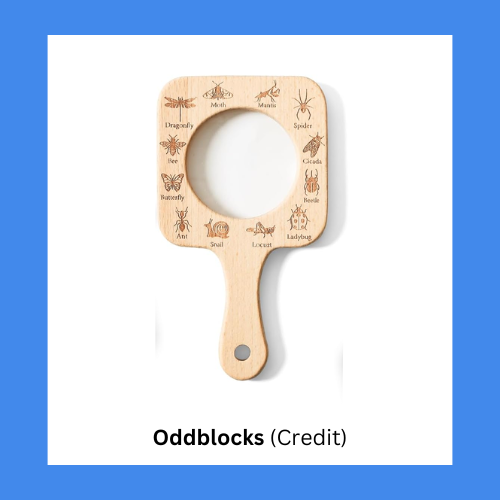
The Ibwaae wooden magnifier set combines exploration with education. A sturdy wooden magnifier pairs with illustrated nature cards on birds, insects, mushrooms, and flowers—turning outdoor walks into guided adventures. It encourages observation, identification, and early scientific thinking, making it a great Montessori-style classroom or backyard companion. See Ibwaae on Amazon.
(06) Kikkerland
Visit the Kikkerland official website.
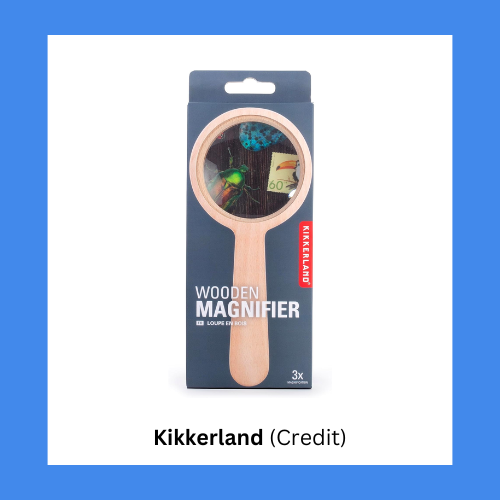
Kikkerland’s wooden magnifier is a minimalist piece of design—made from natural beechwood with a smooth finish and 3x glass lens. Compact yet elegant, it’s suitable for children or adults who love analog curiosity tools. The brand’s blend of form and function makes this magnifier a charming addition to a study desk or explorer kit. See Kikkerland on Amazon.
Over to you!
Wooden magnifying glasses slow kids down in the best way. They make every patch of dirt or flowerbed a field lab. Whether your child’s interest leans toward science, art, or simple discovery, this humble lens turns any sunny afternoon into a close-up adventure worth remembering


