

✅ Kids practise social graces and language when they “shop” in the crate, asking “How much per pound?” and trading items.
✅ Recognising, sorting and naming the food items builds real-world vocabulary, supports early nutrition awareness and encourages better young shoppers.
✅ Ethically made wooden crates (not plastic bins) support — durable, tactile, intentional materials.
Affiliate Link Disclosure – If you see a product you like and click through to buy it, I would genuinely appreciate it. I may earn a small commission — at no extra cost to you. It would mean a lot, thanks!
Pretend Play Wooden Food Crates w/ Food Groups
- (01) Le Toy Van
- (02) Melissa & Doug
- (03) Bigjigs Toys
- (04) Estia Holzspiel
- (05) Tiny Land
- (06) Mentari Toys
Oddblocks Opinion: The simple act of loading and lifting a little wooden crate, stacking labelled fruits or veggies, carrying it across a pretend farmer’s market or play kitchen — there’s tactile satisfaction in the small movement of hand-to-crate-to-table. That physicality is what makes this toy type memorable: it builds fine motor control, spatial awareness and a sense of ownership (“this is my crate of carrots”). For parents juggling screen-time vs hands-on play, a wooden food crate gives open-ended role-play (shopkeeper, chef, customer) anchored in real life. It becomes more than “toy food” — it becomes a little ecosystem where learning and imagination meet.
(01) Le Toy Van
Visit Le Toy Van official website.
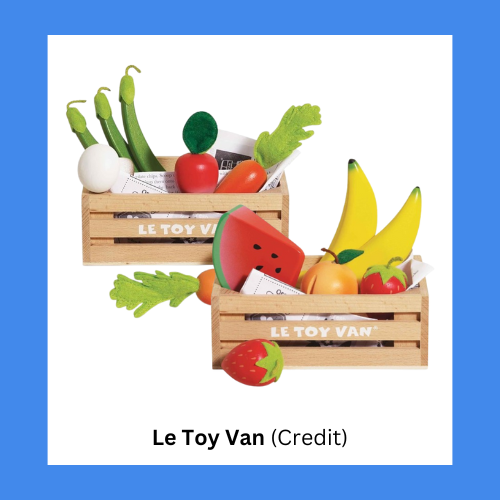
Le Toy Van’s wooden food crates (for example the “Harvest Vegetables” crate) feature FSC-certified wood and water-based non-toxic paints. They offer multiple themes — vegetables, fruit, meat, poultry, eggs — so you can purchase matching crates for different food groups. This supports open-ended play and connects with the Random Notes idea of “brands Le Toy Van … category leaders with multiple food crate play sets with different food groups”. Functionally this crate encourages pretend-market play (loading items, carrying crate, sorting) and builds vocabulary, fine motor skills and social-role skills. See Le Toy Van on Amazon.
(02) Melissa & Doug
Visit Melissa & Doug official website.
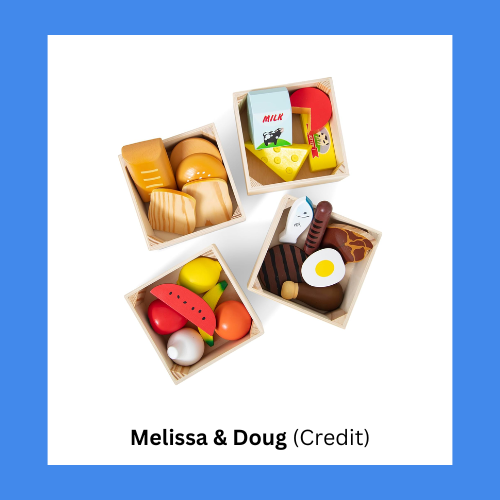
Melissa & Doug’s “Food Groups Wooden Play Food” set comes with 21 solid wood items from all five food groups and four wooden crates for sorting. Although it is broader than a single “crate with one food group” it aligns strongly with the “crate with food items inside” theme. It gives educational value via healthy-meal planning, sorting, color recognition, grouping and early number skills. The brand reputation and durability make it a safe bet for busy parents seeking long-term value. See Melissa & Doug on Amazon.
(03) Bigjigs Toys
Visit Bigjigs Toys official website.
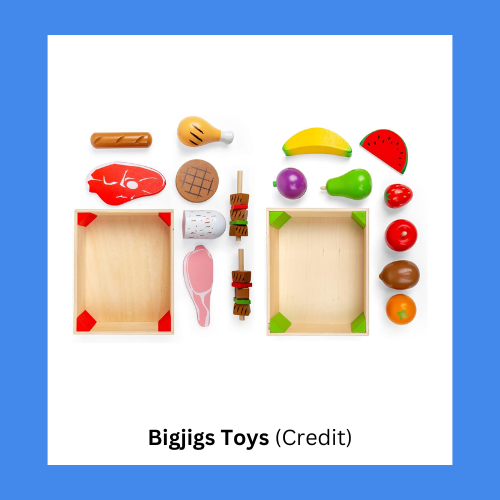
Bigjigs Toys offers straightforward wooden crates — such as the vegetable crate or meat and poultry crate — made from responsibly sourced wood. These wooden food crate playsets hits the niche of a single crate with food items neatly stored inside, perfect for toddlers aged 18 months+ (per specs). It emphasizes material quality and role-play opportunity: sorting fresh produce, restocking the pretend market, improving hand-eye coordination and understanding where food comes from. See Bigjigs Toys on Amazon.
(04) Estia Holzspiel
Visit the Estia Holzspiel official website.
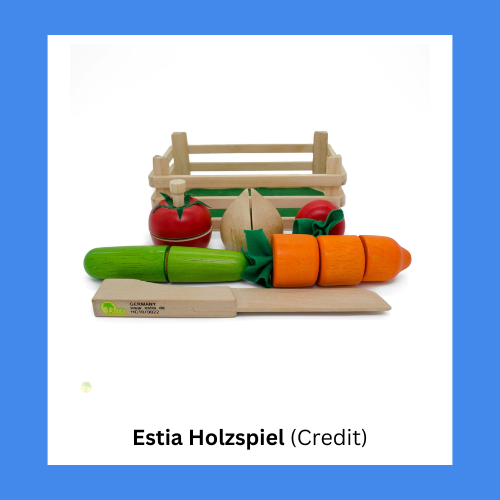
The Estia Holzspiel vegetable crate is hand-crafted in Germany from solid hardwoods and finished with child-safe, EN71-compliant dyes. The set includes a tomato, carrot, radish, cucumber, onion, and a small wooden knife for pretend cutting. Each piece feels substantial and textured, offering a sensory depth often missing in mass-produced toys. The compact wooden crate keeps the pieces organized, mirroring real kitchen or market storage. See Estia Holzspiel on Etsy.
(05) Tiny Land
See it on the Tiny Land official website.
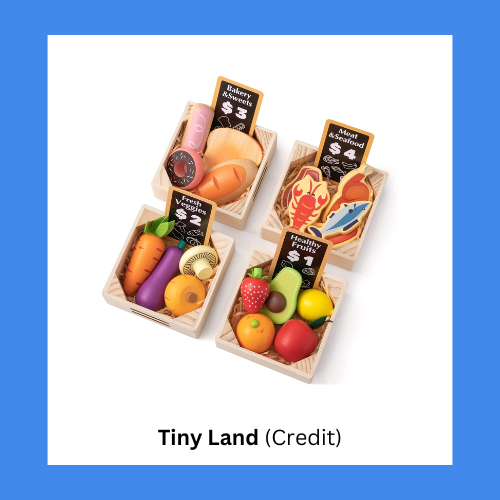
Tiny Land’s wooden food crate set contains over 30 accessories across four food groups—fruits, vegetables, meats, and desserts. Made from natural wood and coated in non-toxic, water-based paint, this set emphasizes eco-friendly play. Children can role-play shopping, cooking, and selling using included price cards, bills, and menus. It supports early number skills, sorting, and financial awareness, offering a wholesome twist on the classic pretend-food crate. See Tiny Land on Amazon.
(06) Mentari Toys
Visit Mentari Toys official website.
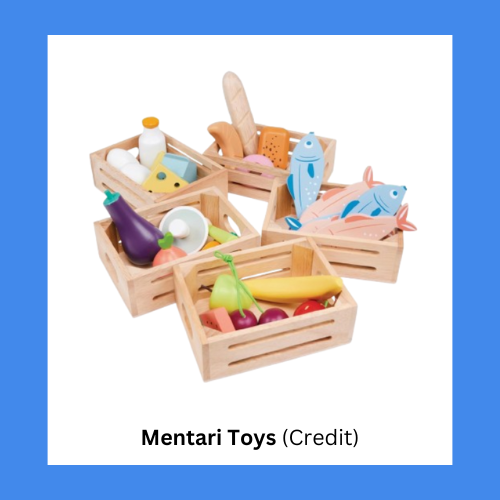
Mentari’s allotment crate offers a smaller scale crate (5 veggies + crate) designed with sustainable rubber-tree wood and non-toxic paints. Designed in Britain, crafted in Indonesia. It emphasizes eco-friendly manufacturing (for every tree used another is replanted) and thus appeals to parents mindful of earth/ethics. Playwise, it inspires picking, cooking and sharing — aligning with developmental outcomes like fine motor skills, vocabulary (names of vegetables) and social play. See Mentari Toys on Amazon.
Over to you!
If you are looking for a toy that marries pretend-shopping play, sustainable craftsmanship and developmental benefit, the wooden food crate category deserves a spot in your toy-rotation. Whether you pick a single themed crate or build a mini market with crates across food groups, your child gets tactile materials, sorting play, role-language practice and meaningful open-ended time away from screens. Choose the brand whose values and design style match your home, and let the crate be one piece of your mindful-play toolkit.


