

Does a wooden toy train work well for schematic play?
Your toddler has pushed the same wooden train back and forth across the floor approximately four hundred times today. You’ve watched. You’ve waited for them to do something else. They haven’t.
Is this normal? Is it meaningful? Should you be worried?
The answer to all three: yes, yes, and absolutely not. What you’re watching is schema play — one of the most important and underappreciated forms of early childhood learning. And the wooden train? It’s one of the best schema toys ever made.
Here’s why.
What Is Schema Play?
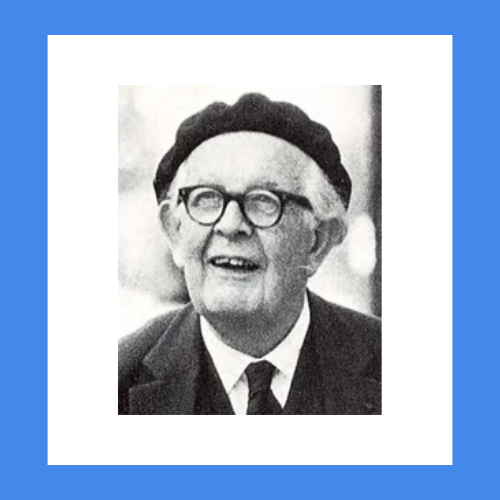
The idea of schemas in child development comes from Swiss psychologist Jean Piaget, who observed that children don’t learn about the world randomly — they learn through repeated patterns of action. A baby who drops their spoon off the high chair tray for the fifteenth time isn’t being difficult. They’re running an experiment. They’re testing a theory about gravity, trajectory, and cause and effect.
These repeated patterns are called schemas, and they are the building blocks of how toddlers develop their understanding of physics, space, relationships, and eventually, abstract thought.
Early childhood researcher Chris Athey expanded significantly on Piaget’s work in the 1990s, identifying how schemas show up consistently across children’s play, drawings, and physical behaviour. Her key insight: when a child seems obsessed with a particular action or type of play, they’re not being repetitive for no reason. They’re deep in a learning loop that their brain is compelled to complete.
Most researchers identify eight to nine common schemas:
- Trajectory — movement through space (throwing, rolling, pushing, dropping)
- Rotation — spinning, turning, circular motion
- Transporting — moving objects from one place to another
- Connecting — joining and disconnecting things
- Enclosing — surrounding or containing objects
- Enveloping — covering or wrapping objects (and themselves)
- Positioning — arranging, lining up, ordering
- Orientation — viewing things from unusual angles
- Transforming — changing the state or appearance of something
The reason schemas matter for parents: once you can name what you’re seeing, your child’s play starts to make complete sense. The obsessions, the repetitions, the seemingly pointless rituals — all of it is purposeful.
Why Wooden Trains Are a Schema Goldmine
Here’s the thing that most articles about trains and schemas miss: a wooden train doesn’t just support one schema. It supports five or six simultaneously — which is extraordinarily rare in a single toy.
Let’s go through them.
Trajectory
Push a wooden train and watch it go. It moves in a line, accelerates, decelerates, stops. Roll it down a ramp and it speeds up. Crash two trains together and both react. This is trajectory schema in its most satisfying, controllable form.
For toddlers in a trajectory schema, the train delivers the core experience — something moving from A to B — without the chaos of throwing (which is the other common trajectory outlet, and rather harder on the furniture).
Rotation
The wheels turn. That’s it — and for a child in a rotation schema, that’s everything.
Watch a toddler pick up a wooden train carriage and slowly spin it upside down to watch the wheels rotate. They’ll do it for longer than you expect. The axle turning, the wheels spinning freely — this is deeply satisfying for a child whose brain is currently preoccupied with the concept of circular motion.
Transporting
Loading small animals, blocks, or figures into an open carriage and pushing them across the room is one of the purest expressions of the transporting schema. The child is moving objects from one location to another — and the train makes that process more structured and repeatable than simply carrying things in their hands.
Children in a transporting schema often use the train as a vehicle for other objects rather than playing “trains” in any conventional sense. You might find the train carriage full of wooden animals, acorns, or small building blocks being ferried from room to room. This is not aimless — it’s schema-driven and developmentally rich.
Connecting
This is where train tracks enter the picture — but here’s the key insight: connecting schema play happens with or without a formal track layout.
When a child snaps two pieces of track together, they’re exploring connection: how things join, what holds, what pulls apart. When they attach a carriage to an engine with a magnetic coupler, that click is a tiny schema moment. When they link five carriages into a long train and then pull them apart one by one, they’re experimenting with both halves of connecting — joining and disconnecting — which are equally important to the schema.
You don’t need a complete oval of track for connecting schema play to happen. A toddler snapping two straight pieces of track together and pulling them apart, over and over, is doing meaningful schema work.
Positioning
Have you noticed your toddler lining the train carriages up in a very specific order? Rearranging them until they’re just so? Getting upset if you move one?
That’s the positioning schema — an intense interest in arrangement, order, and spatial relationships. Wooden trains, with their distinct individual pieces, are ideal for positioning play. Each carriage is a separate object that can be placed, moved, ordered, and reorganised.
Trajectory (with tracks) — Predicting and Confirming
There’s a specific and particularly important form of trajectory play that only happens with tracks: the joy of predictability. A train on a circular track will always come back to the same point. A train sent into a tunnel will always come out the other side.
For a toddler who is just beginning to understand that the world has rules — that causes have consistent effects — this confirmable, repeatable outcome is profoundly satisfying. The train disappears. The train reappears. Every single time. This isn’t boring. For a child building their mental model of how the world works, it’s revelatory.
Tracks vs. No Tracks: Does It Matter?
Short answer: both are valuable, for different reasons.
Without tracks, a wooden train is a pure open-ended toy. It rolls freely, goes wherever the child pushes it, and invites trajectory, transporting, and positioning schema play with no constraints. A toddler who pushes a train across the kitchen floor, loads it with blocks, crashes it into a wall, and tips it over is engaged in genuine schema exploration. The train doesn’t need to be on a track to be doing developmental work.
With tracks, the play shifts toward connecting and predicting. Building a track layout is itself schema play — each piece clicked into the next is connecting schema; the loop that sends the train back to its starting point supports trajectory schema in its “predictable return” form; bridges and tunnels engage enveloping and orientation.
The best approach for most toddlers: start without tracks. Let them push, carry, load, and crash freely. Introduce a simple straight section of track, then a curve. Build complexity as their interest and dexterity develop. A complete oval of track handed to a young toddler can actually overwhelm before it delights.
How to Tell Which Schema Your Child Is In
When your toddler plays with a wooden train, watch what specifically captures them. The schema is usually in the detail.
They keep pushing it back and forth in a line → Trajectory schema. They’re interested in movement, speed, and direction. Try adding a ramp or slope.
They keep turning carriages upside down to watch the wheels spin → Rotation schema. Try also offering spinning tops, wheels, or a simple mechanical pencil sharpener (supervised) to extend the interest.
They fill the carriages with other objects and carry them around → Transporting schema. Offer a range of cargo: small wooden animals, pebbles, acorns, blocks. Let them load and unload freely.
They snap track pieces together and pull them apart repeatedly → Connecting schema. A longer set of varied track pieces — straights, curves, bridges — will deepen this. So will Duplo, stacking toys, and anything that joins and separates satisfyingly.
They line the carriages up in a precise order and correct any disruption → Positioning schema. Don’t rearrange their layout. It matters to them.
They obsess over the tunnel, sending the train through again and again → Enveloping or trajectory schema (or both). The tunnel satisfies both the “disappearing and reappearing” aspect of trajectory and the “enclosing” aspect of enveloping. Buy more tunnels.
How to Support Schema Play With a Wooden Train
Follow, don’t lead. The schema tells you what your child needs to explore. Your job is to observe, name it to yourself, and then offer materials that extend it — not to redirect the play toward what you think they should be doing with a train.
Add loose parts. A wooden train becomes dramatically richer when you add small objects that can be transported, arranged, or loaded. Wooden animals, pebbles, pine cones, small felt balls, acorn caps — these extend play and introduce new schema possibilities without adding more toys.
Don’t complete the layout for them. When a toddler is building a track, resist finishing it. The connecting and problem-solving of getting pieces to fit is the point. A parent who “helpfully” snaps the final piece in has removed the schema moment.
Narrate without directing. “You’re putting all the red ones in a line” or “the train went under the bridge and came out the other side” names what’s happening without taking over. It also builds vocabulary around spatial concepts — under, through, alongside, behind — that directly support later mathematical thinking.
Let the obsession run. A child in a schema is in a deep learning state. The repetitiveness you’re watching is not a sign that they’re stuck — it’s a sign that their brain has found something genuinely important to figure out. Let it run its course. Most schemas resolve naturally when the child has learned what they needed to learn.
Why Wooden Trains Specifically?
Not all trains are equal for schema play. Wooden trains have several properties that make them particularly effective:
Weight and resistance. A wooden train has enough heft that pushing it feels satisfying and produces predictable results. Lightweight plastic trains often move too freely or tip over too easily, which disrupts the trajectory and transporting schema feedback loop.
Honest materials. The grain of the wood, the smoothness of the wheels, the click of a magnetic coupler — these tactile experiences engage a child’s full sensory attention, which deepens schema play rather than distracting from it.
Open carriages. Most wooden train sets include open-top carriages that invite loading and transporting. This single design feature unlocks an entire schema dimension that enclosed carriages simply don’t offer.
Interchangeability. Most wooden train sets are compatible with each other, meaning track pieces and carriages from different brands can mix. This makes the connecting schema richer — different pieces join in different ways, with different degrees of resistance and different satisfying sounds.
Durability. Schema play is repetitive by nature. A train that’s going to be pushed back and forth hundreds of times a day, crashed, loaded, dropped, and taken apart needs to be built to survive it. Wood, consistently, does.
Wooden Trains + Schematic Play
The next time your toddler pushes that wooden train back and forth across the floor for the hundredth time, you’re not watching a child who has run out of ideas. You’re watching a child whose brain has identified something important to understand and is using every repetition to deepen that understanding.
The train doesn’t need to be on the track. The track doesn’t need to be a complete loop. The play doesn’t need to look like “playing trains” in any conventional sense.
It just needs to be happening — freely, repeatedly, and without interruption.
That’s schema play. And wooden trains are one of the finest vehicles for it ever made.
At Oddblocks, we write honestly about wooden and eco-friendly toys and what they actually do for children’s development. Because good play deserves good tools.


