Last Updated: April 17, 2026
Ever watched a child completely absorbed in their imaginary world? Perhaps they’re a daring astronaut exploring distant planets, a skilled chef whipping up a gourmet meal of mud pies, or a nurturing doctor tending to a beloved teddy bear. For many of us, it looks like pure, unadulterated fun – and it is! But what if I told you that this seemingly simple act of make-believe is one of the most profound and powerful forms of learning a child can engage in? What if it’s not just “child’s play,” but a direct, hands-on training ground for the essential “real-world” skills they’ll need for future adult roles, career success, and overall life mastery?
We aim to understand how child-led pretend play prepares our little ones not just for school, but for the complex, ever-evolving landscape of adult life. It’s about empowering them to become adaptable problem-solvers, empathetic communicators, and resilient thinkers. And crucially, it’s about how we, as adults, can best facilitate this extraordinary learning journey without taking over the driver’s seat.
Affiliate Link Disclosure – If you see a product you like and click through to buy it, I would genuinely appreciate it. I may earn a small commission — at no extra cost to you. It would mean a lot, thanks!
Multifaceted Developmental Benefits: The Core Learning Arenas
Pretend play isn’t a one-trick pony; it’s a Swiss Army knife of developmental tools, sharpening skills across virtually every domain. When children step into a pretend scenario, they’re not just playing; they’re actively engaging in a holistic learning experience that builds a robust foundation for their future.
Social-Emotional Growth: Building the EQ Foundation
Imagine a group of children planning a trip to the moon. One wants to be the pilot, another the mission control, and a third the scientist. Immediately, they’re thrust into a situation demanding negotiation, cooperation, and compromise. Who gets which role? What happens if the rocket runs out of fuel?
- Empathy and Perspective-Taking: By stepping into the shoes of different characters – a sad baby, a grumpy king, a brave firefighter – children learn to see the world from another’s point of view. This experience of “what if I were…” is the bedrock of empathy, a crucial skill for building healthy relationships and understanding others’ feelings throughout life.
- Cooperation and Negotiation: Sharing toys, agreeing on roles, resolving disputes over plot points – these are all mini-lessons in social problem-solving. They learn to articulate their needs, listen to others, and find common ground, laying the groundwork for effective teamwork in school and eventually, the workplace.
- Emotional Regulation: Pretend play provides a safe outlet for children to explore complex emotions. They can act out fears, frustrations, or joys, giving them a chance to understand and manage these feelings in a controlled environment. A child pretending to be a parent might soothe a crying doll, learning about patience and care.
Language & Communication Mastery: Finding Their Voice
Pretend play is a vibrant verbal playground. Children don’t just mimic; they create, elaborate, and communicate entire narratives, often in real-time.
- Expanding Vocabulary: Encountering new roles, objects, and scenarios naturally introduces new words. A child playing “veterinarian” might learn “stethoscope,” “diagnosis,” or “prescription.”
- Narrative Development: Crafting a story from beginning to end, complete with characters, conflict, and resolution, significantly boosts narrative skills. This ability to construct a coherent story is vital for academic writing, effective presentations, and even just telling a good joke.
- Active Listening and Articulation: To sustain a pretend scenario, children must actively listen to their playmates’ contributions and clearly articulate their own ideas and intentions. Misunderstandings lead to plot holes, prompting them to refine their communication strategies. This practice hones their ability to understand and be understood – a cornerstone of all effective communication.
Cognitive & Problem-Solving Acuity: Brain Gym for Little Ones
Behind every elaborate fort or imaginary tea party lies a complex web of cognitive functions working in overdrive.
- Imagination and Creativity: This is the most obvious benefit, but its importance cannot be overstated. Pretend play is the ultimate incubator for creativity, allowing children to invent entire worlds, characters, and solutions without real-world constraints. This creative muscle is what drives innovation and out-of-the-box thinking later in life.
- Symbolic Thinking: Using a block as a phone, a blanket as a superhero cape, or a stick as a magic wand – this is symbolic thinking in action. It’s the ability to understand that one thing can represent another, a fundamental cognitive skill essential for reading, understanding mathematical concepts, and abstract reasoning.
- Planning and Adaptability: Every pretend scenario requires some level of planning (“First we’ll build the spaceship, then we’ll fly to Mars!”). But things rarely go exactly to plan in play, forcing children to adapt, revise their strategies, and come up with on-the-spot solutions – skills invaluable for navigating the unpredictable nature of adult life.
- Problem-Solving in Children: “Our patient has a fever, what should we do?” “The dragon stole our treasure, how do we get it back?” Pretend play offers endless opportunities for children to identify problems, brainstorm solutions, and test them out in a low-stakes environment.
From Imaginary Worlds to Real-World Readiness: Bridging the Gap
This is where the true power of pretend play shines brightest. It’s not just about discrete skills; it’s about how these skills coalesce to prepare children for the actual demands of adult life. The lessons learned while playing “house” or “store” are surprisingly practical and lay the groundwork for understanding the complexities of community, commerce, and caregiving.
Consider a child pretending to be a shopkeeper. They’re practicing basic math (counting change), customer service (greeting customers, answering questions), organization (stocking shelves), and even understanding supply and demand. These are nascent forms of financial literacy and business acumen! Or take the child playing “parent” to a doll: they’re learning about responsibility, nurturing, empathy, and the routines involved in caregiving. These aren’t just cute simulations; they’re direct rehearsals for life skills that will be vital in their future family roles, community involvement, and even professional paths.
The narratives developed in play translate into strong communication skills needed for academic essays or professional presentations. The problem-solving honed in a fantastical adventure directly applies to troubleshooting issues at school or in a future career. Empathy cultivated by playing different roles fuels effective leadership and harmonious relationships. Pretend play is, in essence, play-based learning that acts as a direct bridge from their imaginative worlds to the pragmatic realities of the adult world, teaching them how to be resilient, resourceful, and deeply human.
The Critical Role of Child-Directed Play
While structured activities certainly have their place, the magic of pretend play largely stems from its child-directed nature. This isn’t just a preference; it’s a critical component for maximizing developmental benefits.
When children are the architects and directors of their own play, they are fully invested. They choose the themes, define the roles, set the rules, and drive the plot. This autonomy fosters an intrinsic motivation that supercharges learning. They are practicing decision-making, developing independence, and building self-efficacy – the belief in their own ability to succeed. An adult-imposed script, no matter how well-intentioned, often stifles the very creativity, problem-solving, and emotional processing that makes pretend play so powerful. When children lead, the play organically aligns with their current developmental needs and interests, ensuring maximum engagement and learning.
Facilitating Meaningful Play: Guidance for Adults
So, if child-led play is the key, what’s our role as adults? It’s not about dictating the narrative, but about creating an environment where this profound learning can flourish. Think of yourself less as a director and more as a stage manager or a supportive cast member when invited.
Providing the Stage: Space, Time, and Materials
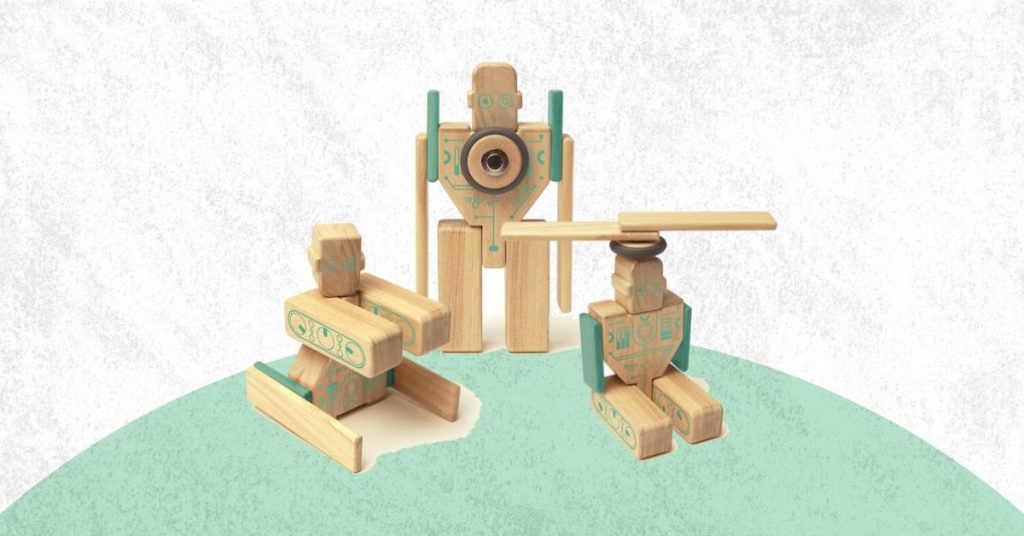
- Offer Open-Ended Materials: The best “toys” for pretend play aren’t specific action figures or highly structured sets, but rather open-ended materials that can transform into anything a child imagines. Think blocks, scarves, dress-up clothes, cardboard boxes, natural items like sticks and stones, and art supplies. These allow for endless possibilities and truly fuel creativity.
- Designate a Play Space: This doesn’t need to be an entire room, but a corner or area where materials are accessible and children feel free to make a “mess” of their imaginative creations without immediate pressure to clean up.
- Allocate Unstructured Time: In our overscheduled world, unstructured play time is a precious commodity. Protect it fiercely. Boredom can be the greatest catalyst for imaginative play, prompting children to create their own entertainment and worlds.
Knowing When to Observe, Participate, and Step Back: The Art of the Adult Role
This is perhaps the trickiest balance to strike, but also the most rewarding.
- Observe: Be present, but quietly. Watch how your child interacts, solves problems, and expresses themselves. Observing gives you invaluable insights into their inner world, their developmental stage, and their burgeoning skills. Celebrate their ingenuity silently or with a simple, genuine compliment later.
- Participate (When Invited, and on Their Terms): If your child invites you into their play, join them, but be a supporting character. Follow their lead, ask open-ended questions that expand their thinking (“What happens next?” “How will we solve this problem?”), and resist the urge to take over, correct, or impose your own ideas. You’re there to enhance, not to control. “Oh, a wise wizard! What spell should I cast?” rather than “No, the wizard would never do that.”
- Step Back: This is often the hardest part, especially when you see them struggling or about to make a “mistake.” But allowing children to grapple with challenges, negotiate conflicts, and figure things out independently is where the deepest learning happens. It builds resilience, problem-solving prowess, and confidence. Trust their process.
The Unsung Hero of Childhood
At its heart, pretend play is so much more than just a delightful way to pass the time. It is the rehearsal stage for life, the workshop where empathy is forged, where problems are deconstructed, and where imagination blossoms into innovation. By embracing child-led pretend play, we aren’t just indulging our children; we are actively investing in their future success, equipping them with an arsenal of real-world skills that will serve them in every relationship, every challenge, and every triumph.
So, the next time you see a child lost in their imaginary world, remember that they are not just playing; they are preparing. They are building the foundation for a vibrant, capable, and successful future, one imaginative leap at a time. Let’s give them the space, time, and freedom to do just that.